Upgrade your attic insulation to current Wisconsin building code with clean, dust-free fiberglass installation. All work performed by certified professionals with proper ventilation and air sealing.
Quick Benefits:
Wisconsin Code Compliant – R-49 or R-60 installation to meet or exceed current standards
Clean Fiberglass Only – Virtually dust-free installation without the mess of cellulose
Complete Prep Work Included – Air sealing, baffles, and can light covers for optimal performance
Fast Installation – Most attics completed in one day
Prevents Moisture Issues – Proper ventilation design prevents condensation and mold
OVERVIEW OF THE SERVICE
Proper attic insulation is one of the most cost-effective ways to improve your home's energy efficiency and comfort. Whether you're upgrading old insulation, replacing vermiculite, or insulating a new construction project, blown-in fiberglass insulation provides superior thermal performance without the mess and dust of cellulose products.
We exclusively use blown-in fiberglass insulation because it's clean, doesn't clog equipment, and provides consistent R-value throughout your attic. Our installation includes all necessary preparation work—air sealing, ventilation baffles, and can light covers—to ensure your insulation performs at its best for years to come.
Every installation meets or exceeds Wisconsin building code requirements (R-49 minimum), and we can upgrade to R-60 for maximum energy efficiency.
Why Blown-In Fiberglass Insulation
What is Blown-In Fiberglass?
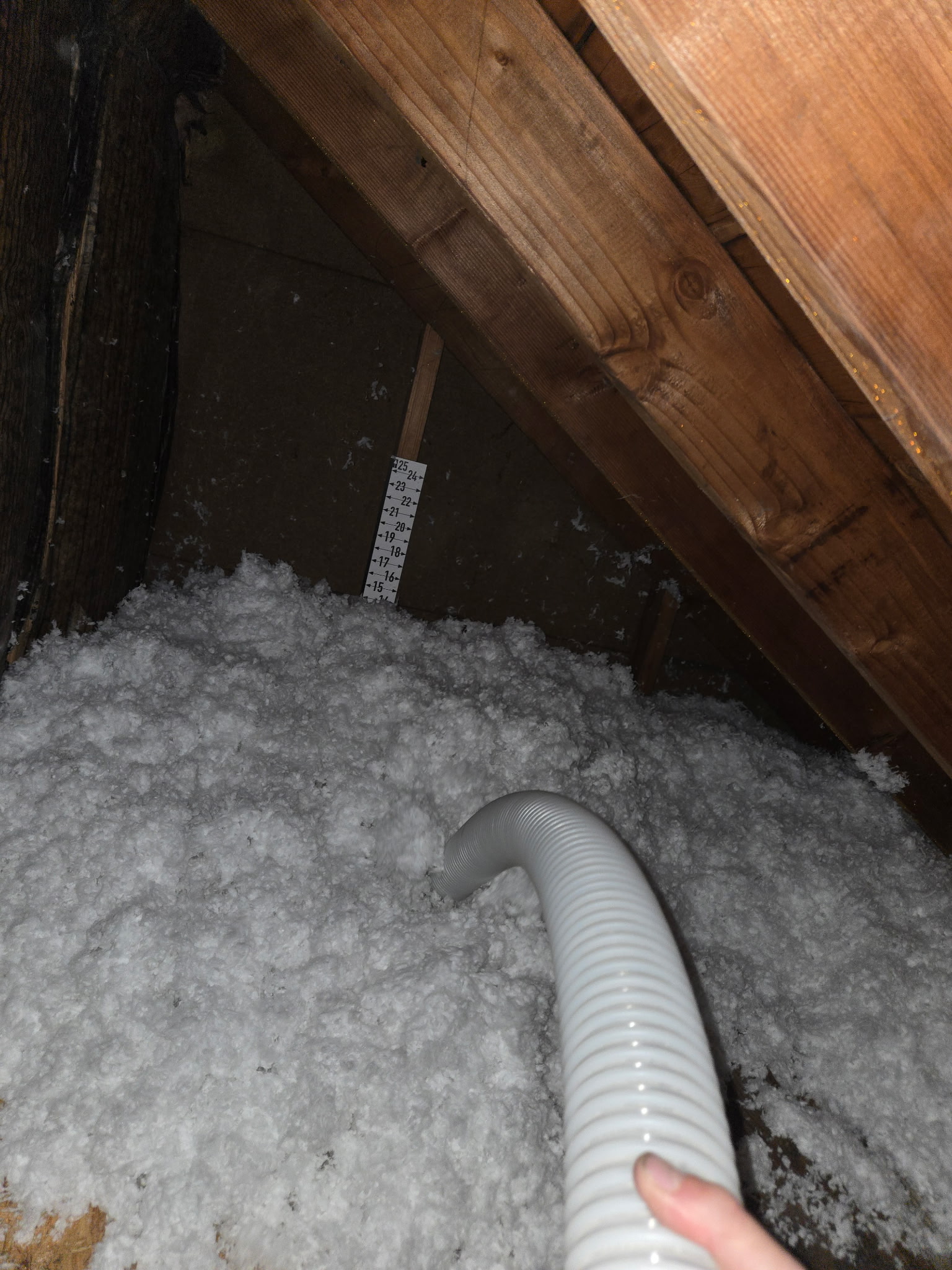
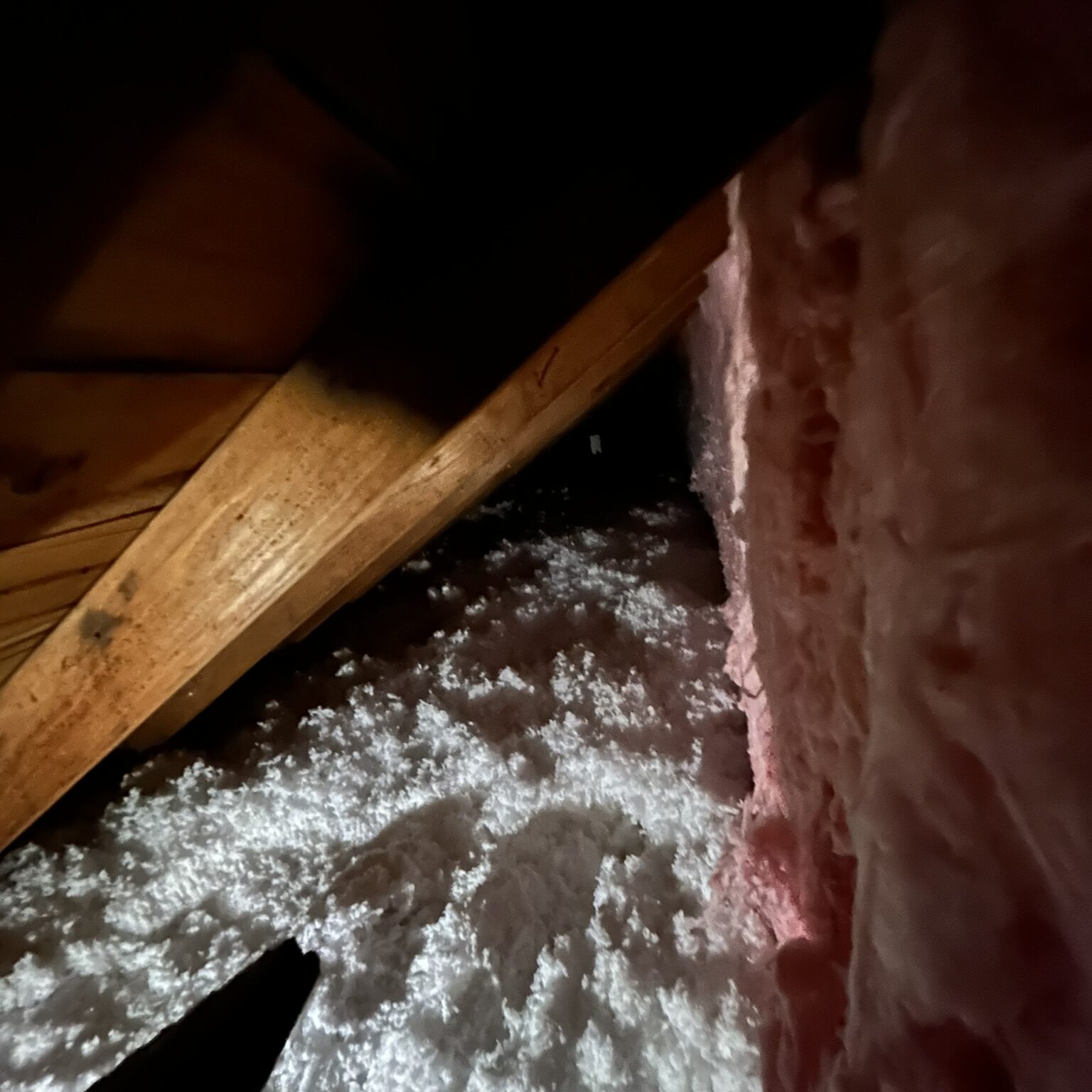
Blown-in fiberglass insulation consists of loose-fill fiberglass fibers that are blown into your attic space using specialized equipment. Unlike batt insulation (the pink rolls you see at hardware stores), blown-in insulation fills gaps and hard-to-reach areas, providing complete coverage without seams or gaps.
Why We Choose Fiberglass Over Cellulose
Many insulation companies offer both fiberglass and cellulose (recycled paper) products. We exclusively use fiberglass for several important reasons:
Fiberglass Advantages:
- Virtually dust-free – Clean installation with minimal mess
- Equipment-friendly – Doesn't clog blowing machines
- Consistent performance – Maintains R-value over time
- No settling – Fiberglass doesn't compact as much as cellulose
- Moisture resistant – Doesn't absorb water like cellulose
- Faster cleanup – Less time spent cleaning, which keeps costs down
Why We Avoid Cellulose:
- Extremely dusty – Creates significant mess during installation
- Clogs equipment – Plastic bags from manufacturing clog blowing machines
- Higher labor costs – Requires extensive cleanup time
- Less cost-effective – Additional cleanup time increases project costs
- Settles more – Can lose R-value over time as it compacts
Our experience shows that fiberglass provides better long-term value and a cleaner installation process.
Wisconsin Building Code Requirements
R-49 Minimum for Attics Over Living Spaces
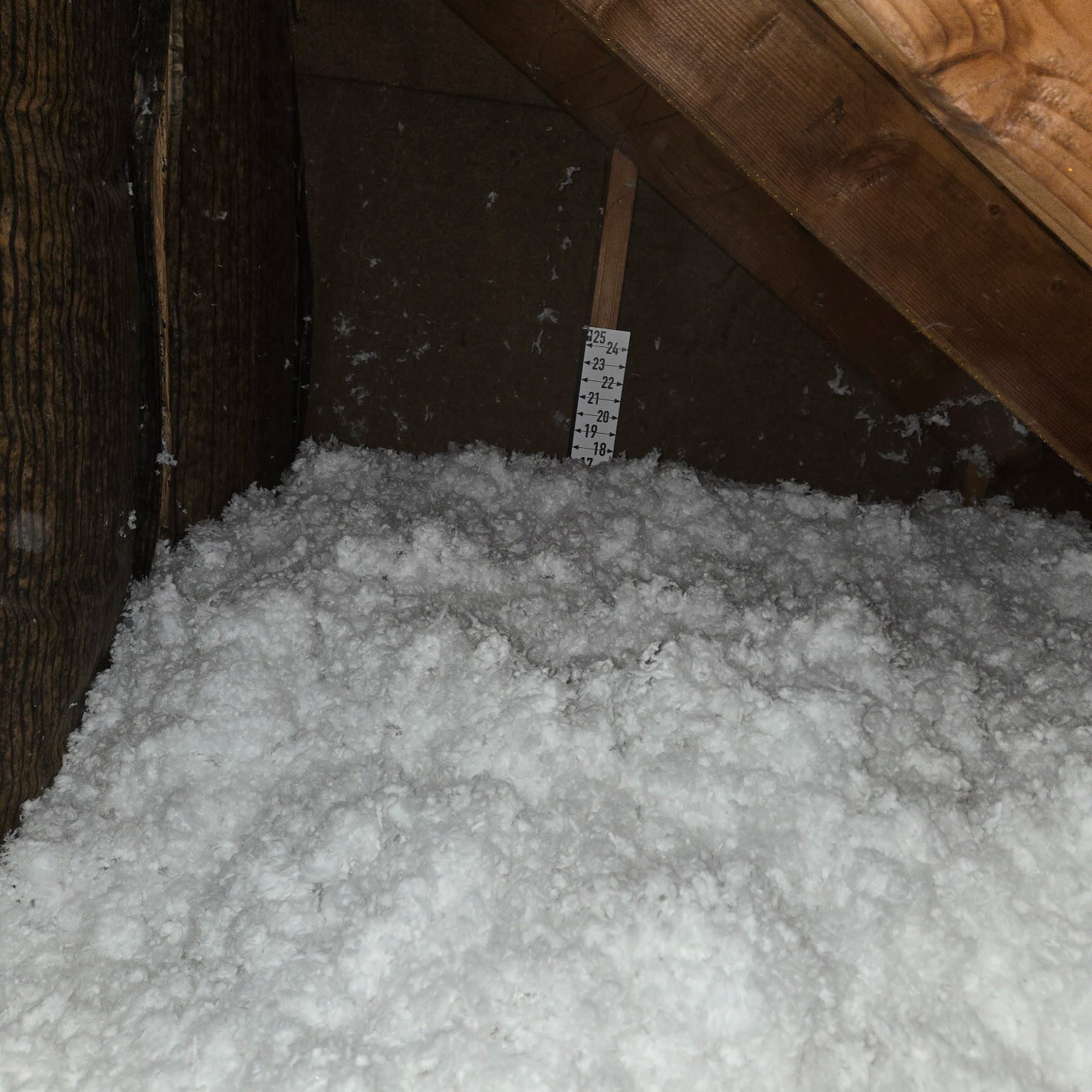
Wisconsin building code requires a minimum of R-49 insulation in attics over conditioned (heated/cooled) living spaces. This translates to approximately 18-19 inches of blown-in fiberglass insulation.
R-60 Option for Maximum Efficiency
Many homeowners choose to upgrade to R-60 (approximately 22-23 inches of blown-in fiberglass) for:
- Maximum energy efficiency
- Lower heating and cooling bills
- Increased comfort during extreme temperatures
- Better resale value
What is R-Value?
R-value measures insulation's resistance to heat flow. The higher the R-value, the better the insulation performance. Wisconsin's cold winters make high R-values essential for comfort and energy savings.
Common R-Values:
- R-19: Older building code (no longer adequate)
- R-38: Previous code requirement (now outdated)
- R-49: Current Wisconsin minimum requirement
R-60: Premium performance option
The Installation Process
Step 1: Initial Assessment & Estimate
On-Site Inspection:
- Measure attic square footage
- Assess current insulation (if any)
- Identify obstacles and access challenges
- Check ventilation adequacy
- Inspect can lights for UL rating
- Note air gaps and penetrations that need sealing
Written Estimate:
- Detailed scope of work
- R-value recommendation (R-49 or R-60)
- All prep work included
- Transparent pricing
- Timeline estimate
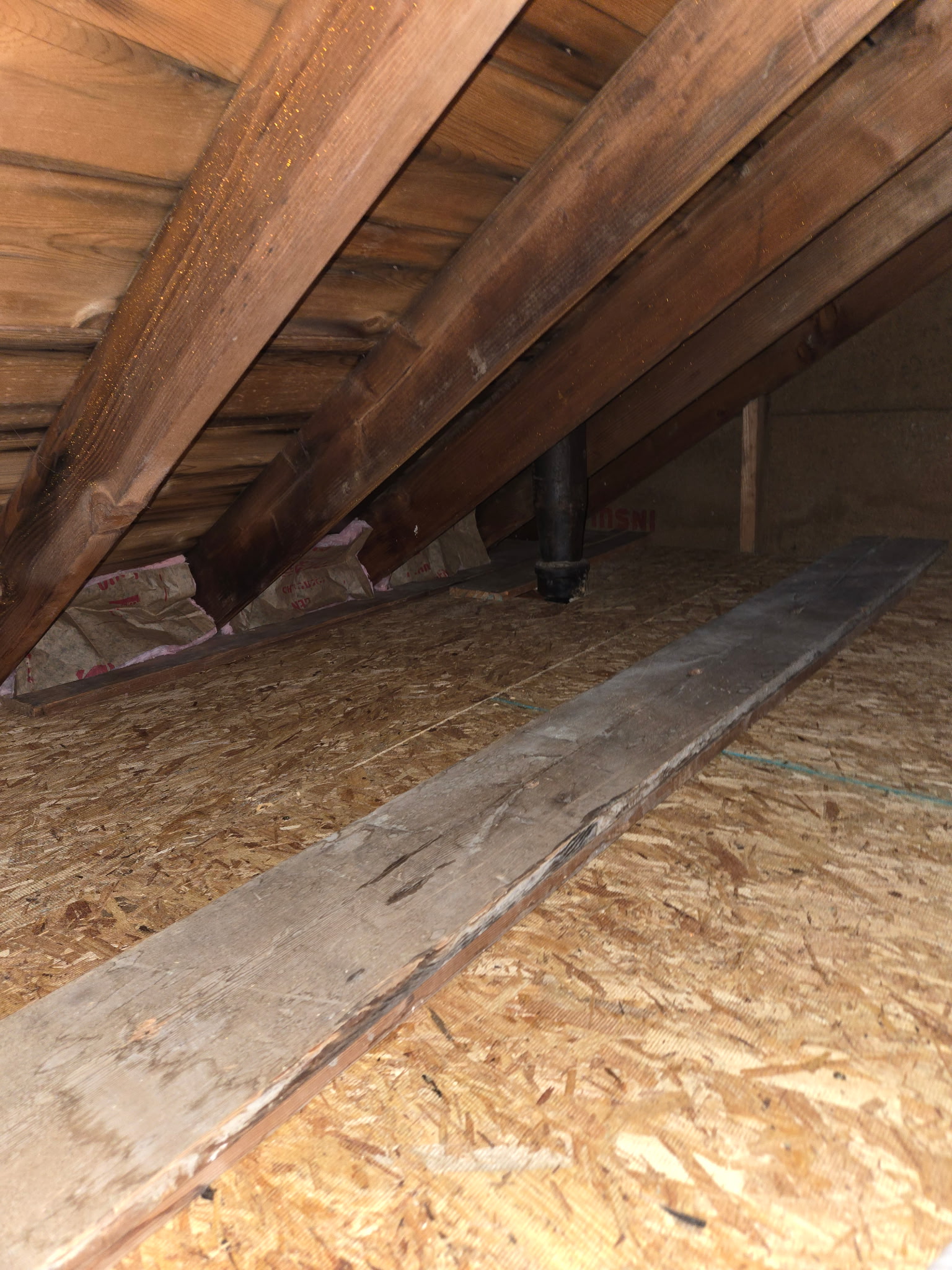
Step 2: Preparation Work (Critical for Performance)
Before we blow any insulation, we complete essential prep work:
Air Sealing:
- Spray foam around all penetrations (wiring, pipes, vents)
- Seal gaps around chimneys
- Fill cracks and holes where air leaks occur
- This step is crucial—without proper air sealing, insulation efficiency drops significantly
Can Light Covers:
- Inspect all recessed can lights
- Verify if they're UL-rated for insulation contact
- If NOT UL-rated: Install fire-retardant covers over lights before insulating
- This prevents fire hazard from insulation contact with hot fixtures
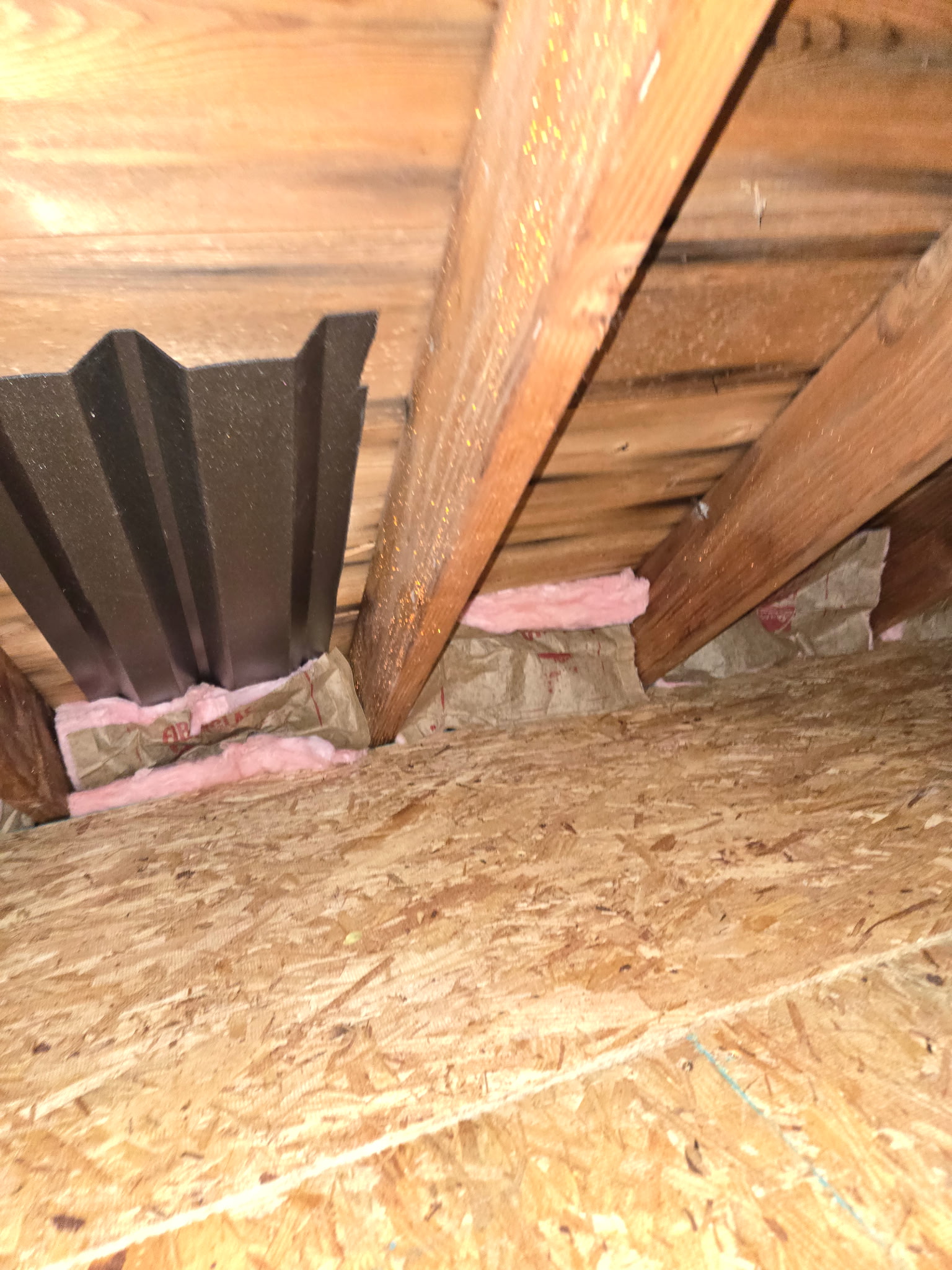
Ventilation Baffles:
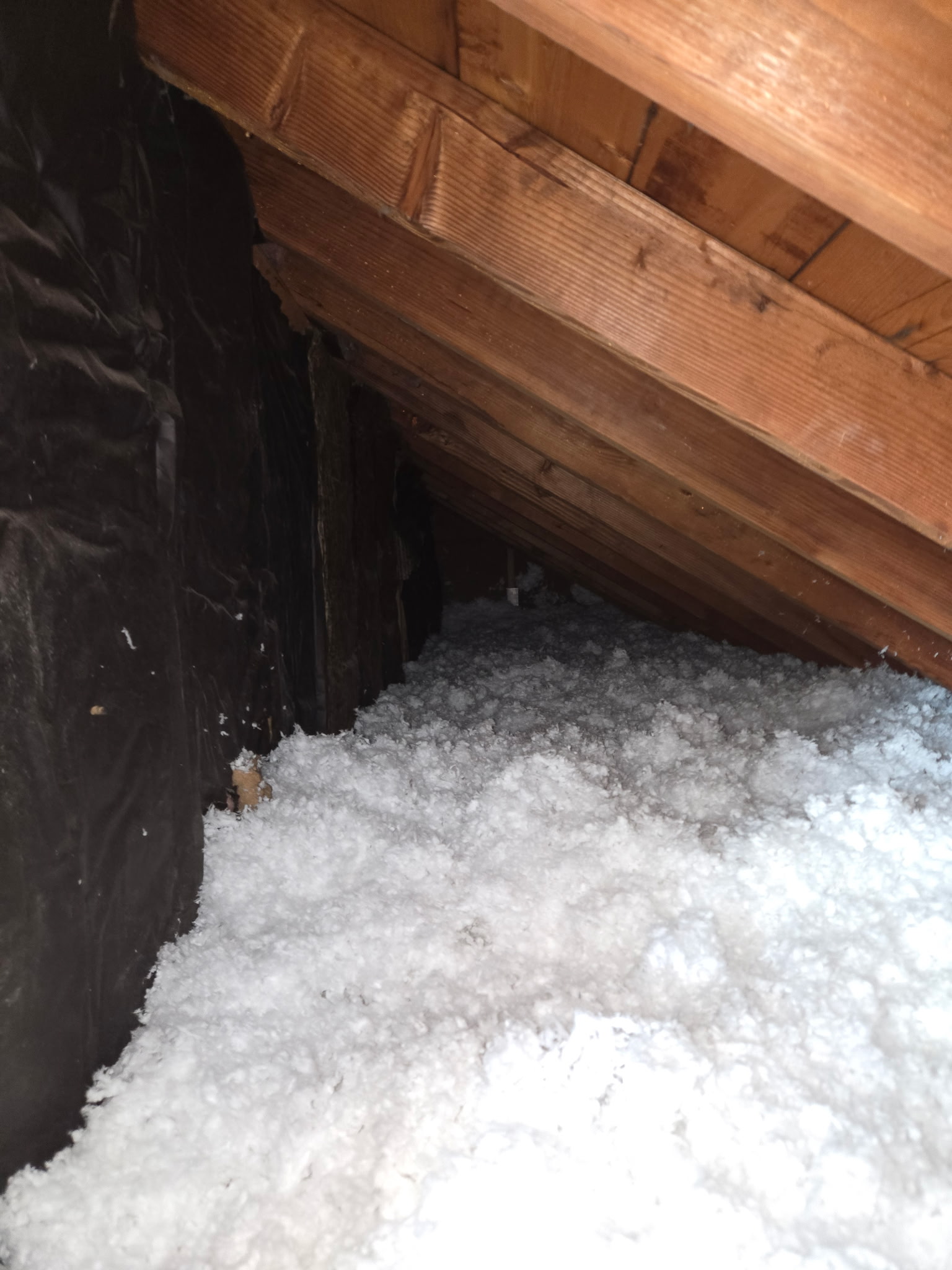
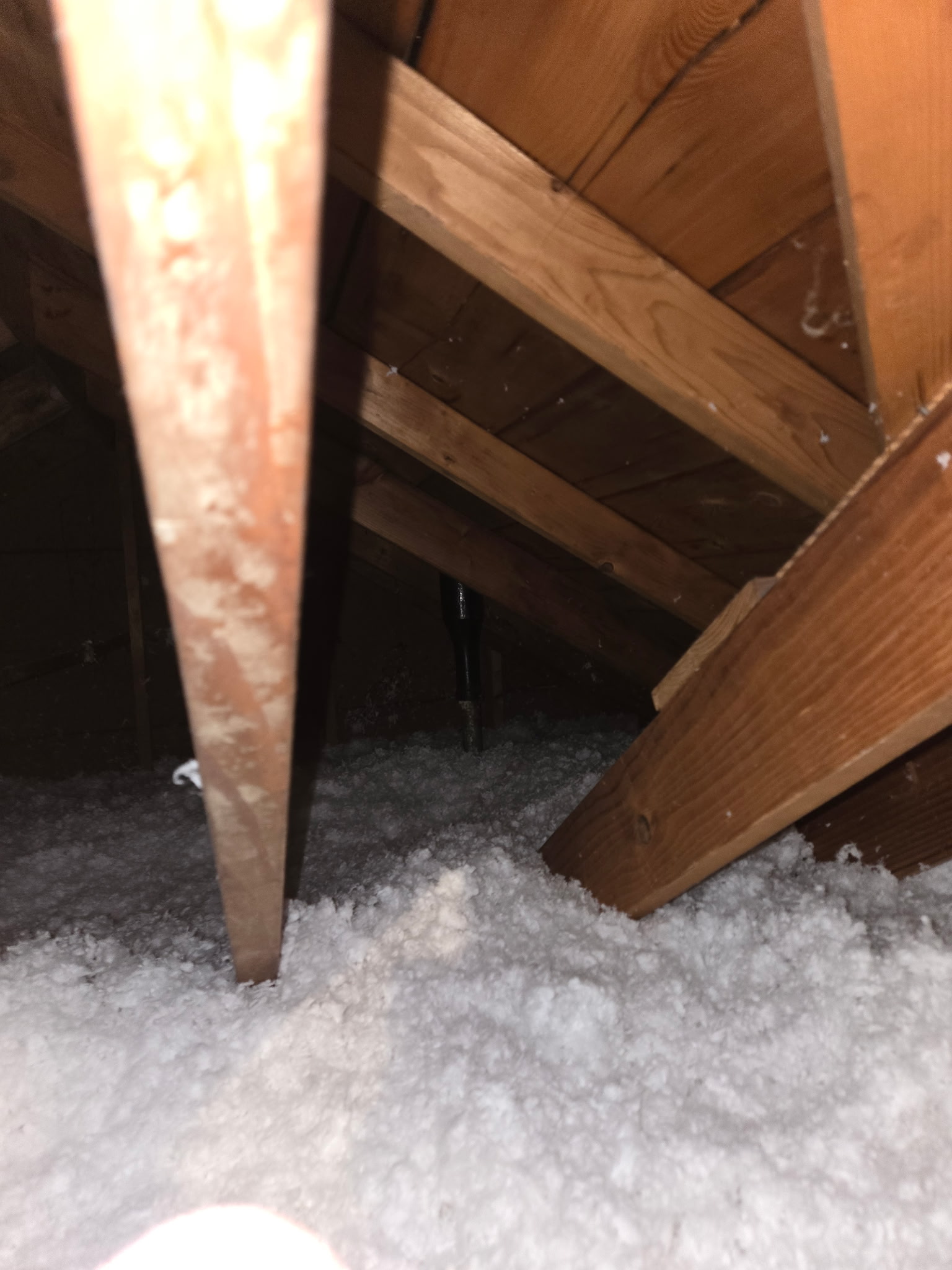
- Install foam baffles along roof edges
- Ensures proper airflow from soffit vents to ridge vents
- Prevents insulation from blocking soffit ventilation
- Critical for preventing moisture issues and maintaining roof health
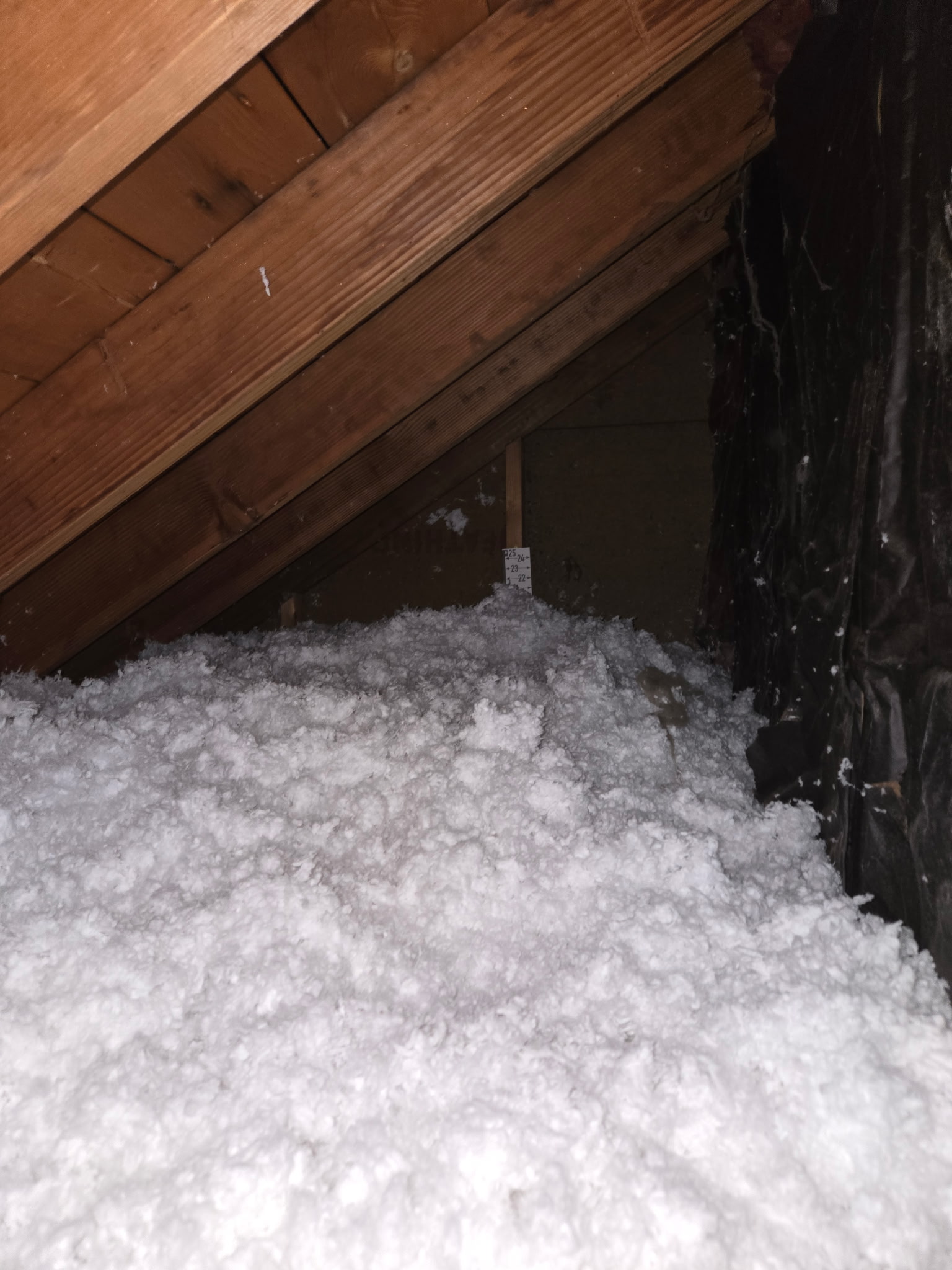
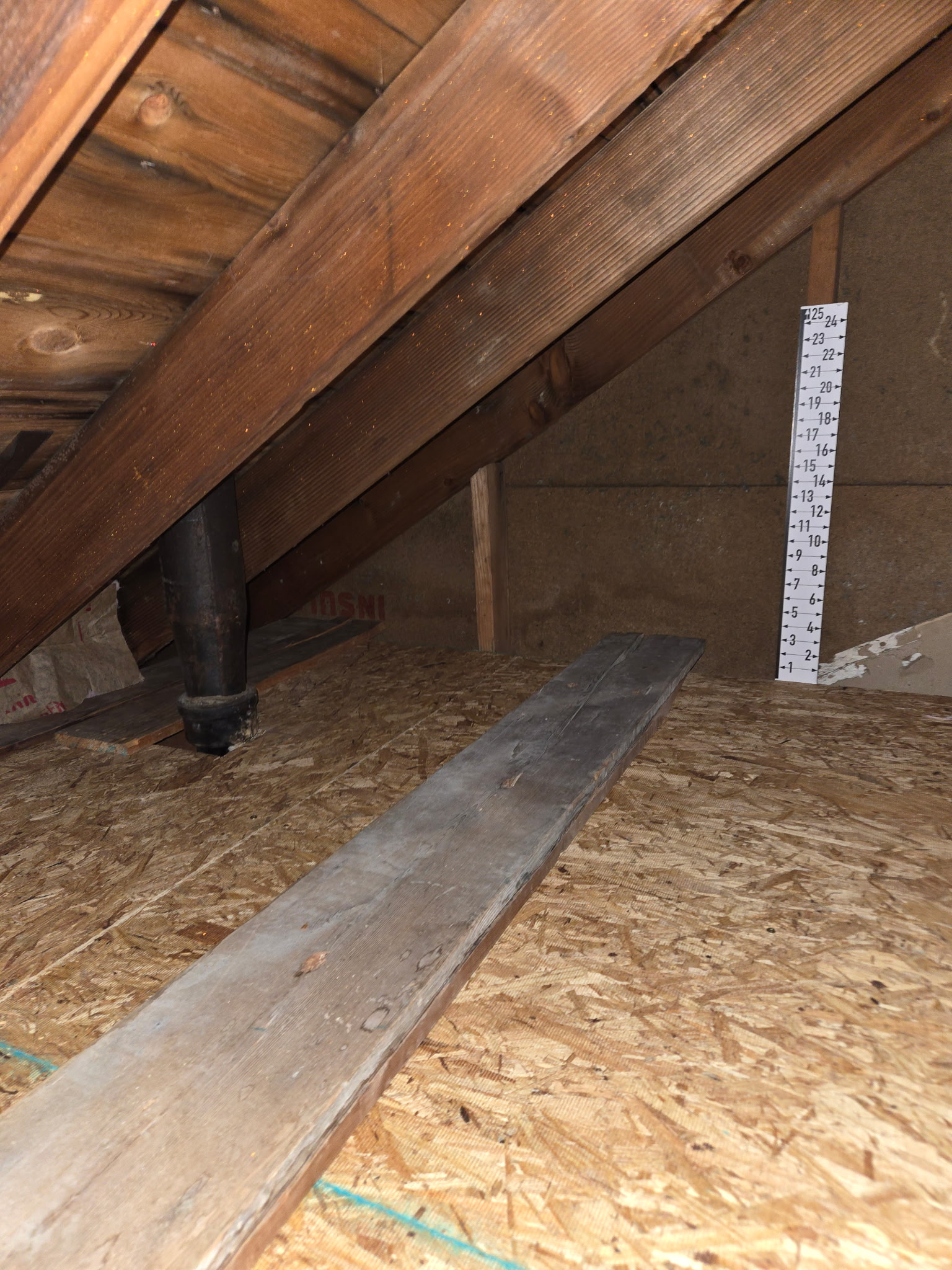
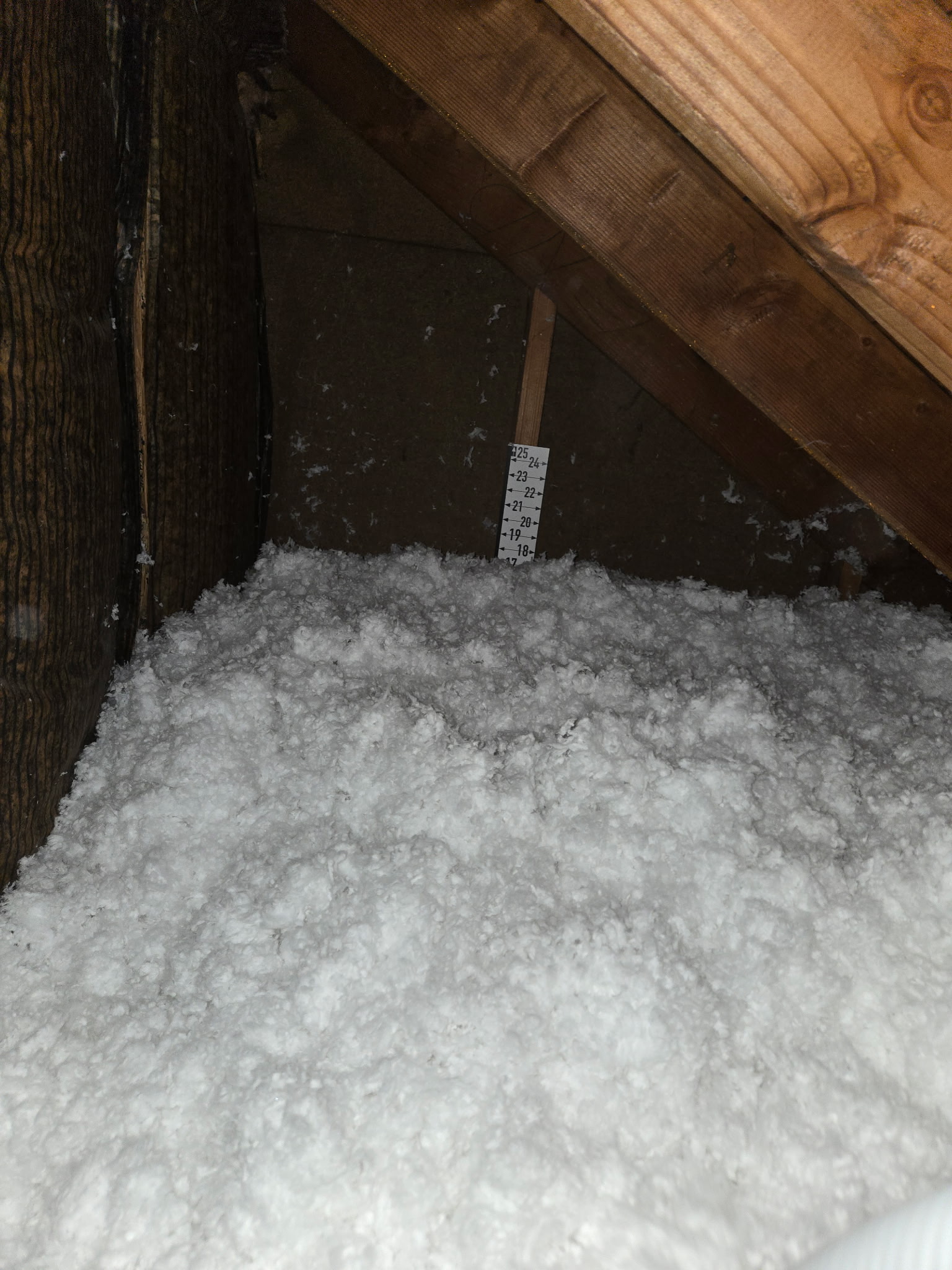
R-Value Guides:
- Place cardboard rulers throughout attic
- Marked to show target depth (R-49 or R-60)
- Ensures consistent insulation depth
- Allows our crew to verify proper coverage
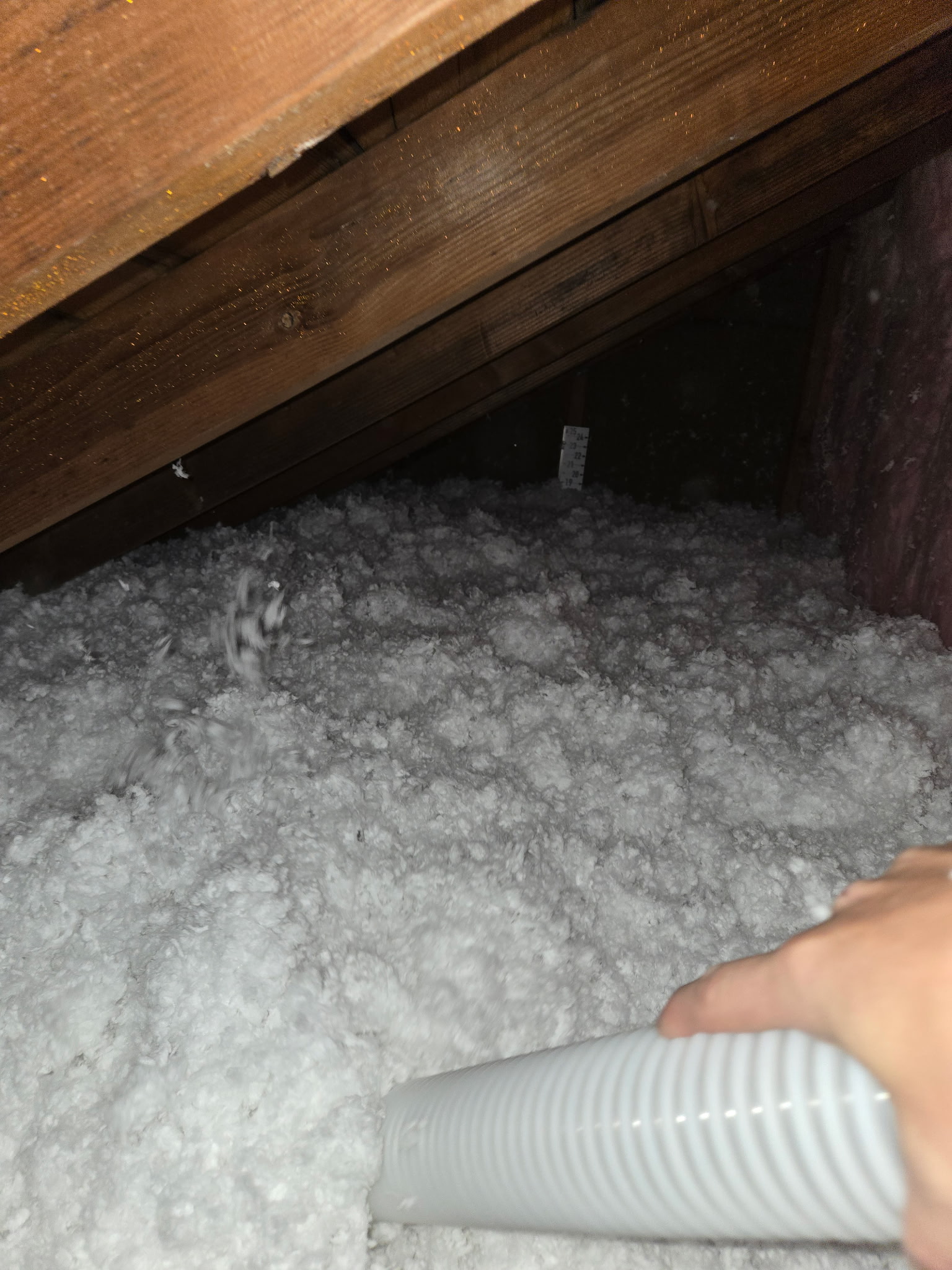
Step 3: Blown-In Insulation Installation
Equipment Setup:
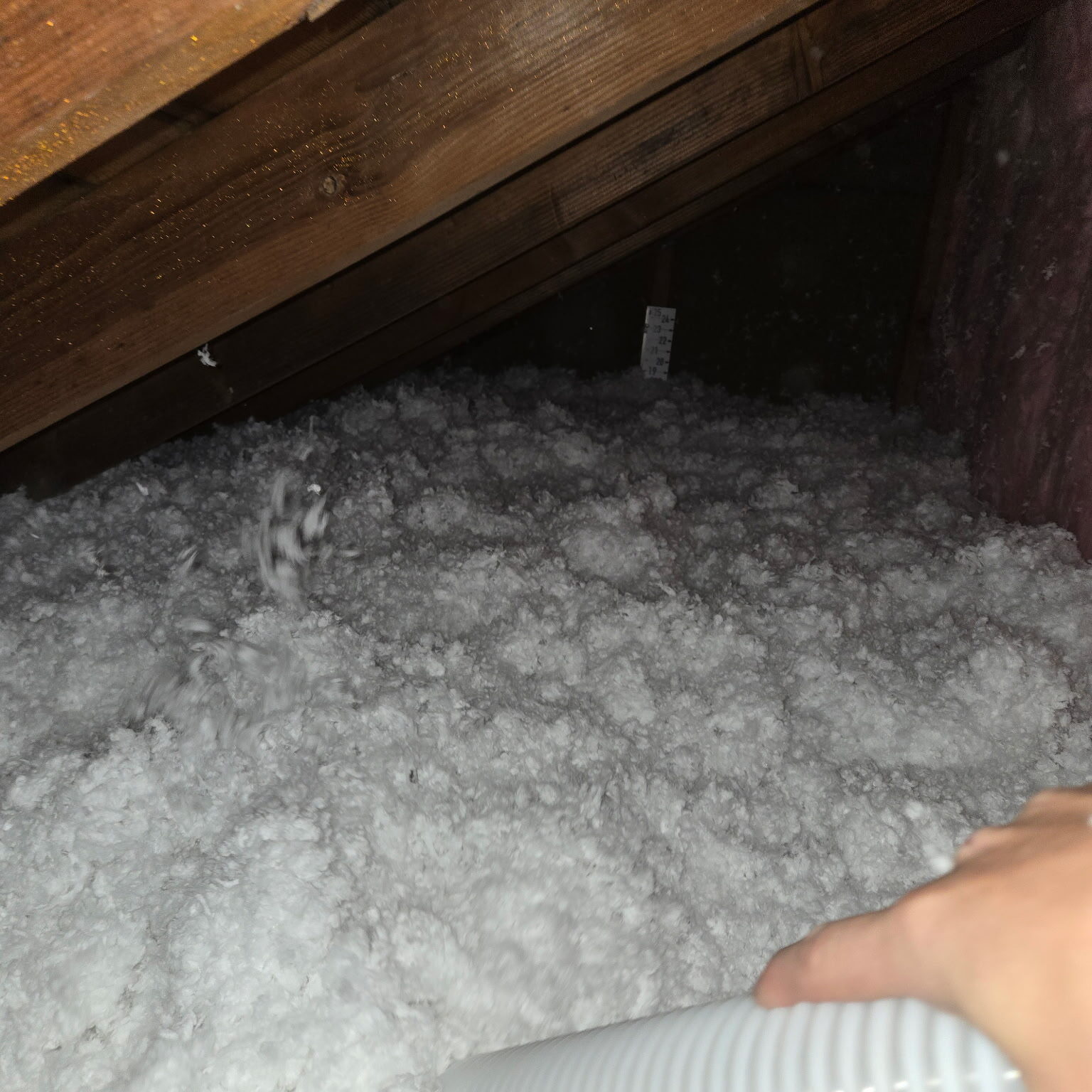
- Position insulation blowing machine outside home (usually in driveway or garage)
- Run 3-4 inch hose from machine through window or door to attic access
- Load machine with bags of blown-in fiberglass
Installation Technique:
- Start at the furthest point from attic access
- Work systematically toward the scuttle/access point
- Blow insulation to marked depth on R-value guides
- Fill all gaps and hard-to-reach areas
- Ensure even coverage throughout attic
- Don't compact insulation (reduces R-value)
Quality Control:
- Verify depth at multiple locations using guides
- Ensure no voids or thin spots
- Check around obstacles (ductwork, chimneys)
- Confirm proper coverage near eaves (without blocking vents)
Step 4: Final Inspection & Cleanup
- Walk through attic to verify complete coverage
- Ensure all baffles remain visible and functional
- Clean up any loose fiberglass from attic access area
- Provide certificate of installation with R-value achieved
- Answer any homeowner questions
Timeline:
- Simple top-up: 3 hours
- Standard installation (1,800 sq ft to R-49): Half-day to one full day
- Full removal and reinstall: Up to 5 days
- Most projects: Completed in one day
Attic Preparation
Blown-In Insulation - Installation
What makes Our Installation Different
Complete Prep Work Included
Many companies skip or rush through preparation work to save time. We never do. Our installation includes:
- Air sealing with spray foam
- Proper ventilation baffles
- Can light covers for non-UL-rated fixtures
- R-value guides for quality control
This comprehensive approach ensures your insulation performs at its best.
Fiberglass-Only Philosophy
We don't offer cellulose because we've found it creates more problems than it solves:
- Dust throughout your home during installation
- Equipment clogs and breakdowns
- Additional cleanup time (which increases costs)
- Settling over time reduces R-value
Fiberglass is cleaner, more consistent, and more cost-effective in the long run.
Storage Space Considerations
Important: Blown-in fiberglass is light and fluffy. Walking on it or storing heavy items on it will compact the insulation and reduce its R-value.
Options for Storage:
- No storage in attic – Protect your insulation investment
- Build a raised platform – Have a carpenter construct a platform over a section of the attic so you can store items without compacting insulation
- Limited storage on boards – Some homeowners place boards in specific areas, understanding this compacts insulation beneath them
We recommend discussing your storage needs during the estimate so we can provide the best solution.
Focus on Proper Ventilation
Moisture Issues Don't Come from Insulation Itself
Many homeowners worry that blown-in insulation causes moisture problems. The insulation itself does not cause moisture issues. Problems stem from:
Installation Errors:
- Blocked soffit vents (insulation pushed into vents)
- Missing or inadequate ventilation baffles
- Improper air sealing
Structural Issues:
- Roof leaks
- Ice dams
- Inadequate attic ventilation
- Exhaust fans venting into attic (should vent outside)
Our installation prevents these issues by ensuring proper ventilation design and airflow from soffit to ridge.
Pricing & What to Expect
Cost Factors
Every insulation project is unique. Pricing depends on:
Primary Factors:
- Square footage – Larger attics require more material and labor
- R-value target – R-60 requires more material than R-49
- Current insulation – Removal of old insulation adds time and disposal costs
- Project scope – Amount of prep work required (air sealing, baffles, can lights)
- Seasonality – Winter work is more expensive due to challenging conditions
- Access challenges – Difficult attic access increases labor time
Example Pricing:
- 1,800 sq ft attic to R-49: ~$5,900 (all-inclusive with prep work)
- Prices vary based on specific conditions
What's Included in Our Pricing
- All labor for installation
- All blown-in fiberglass insulation
- Air sealing with spray foam
- Ventilation baffles
- Can light covers (if needed)
- R-value guides and verification
- Cleanup
- Certificate of installation
Timeline & Scheduling
Book Ahead: Schedule your installation 2-3 weeks in advance. We stay busy, especially during ideal seasons (spring and fall).
Project Duration:
- Top-up (adding insulation to existing): 3 hours
- Standard new installation: Half-day to one day
- Removal and reinstall: Up to 5 days
- Most residential projects: Completed in one day
Seasonal Considerations:
- Best seasons: Spring and fall (moderate attic temperatures)
- Winter: Can be done but more expensive (cold, challenging conditions)
Summer: Can be done but may be more expensive (extreme heat in attic)
Energy Saving & Benefits
Lower Heating and Cooling Bills
Proper insulation dramatically reduces energy consumption:
- Keeps heat inside during winter
- Keeps heat outside during summer
- Reduces strain on HVAC system
- Can cut heating/cooling costs by 20-40%
Improved Home Comfort
Beyond energy savings, better insulation means:
- More consistent temperatures throughout home
- Fewer drafts
- Less noise from outside
- More comfortable bedrooms in summer and winter
Environmental Benefits
Reducing energy consumption:
- Lowers your carbon footprint
- Decreases demand on power grid
- Reduces fossil fuel consumption
- Helps combat climate change
Increased Home Value
Upgrading to current code:
- Meets requirements for home sales
- Attracts energy-conscious buyers
- Can improve home appraisal
- Shows home is well-maintained
COMMON CONCERNS & MISCONCEPTIONS
"Won't insulation cause moisture problems?"
No, when properly installed.
Blown-in fiberglass itself does not cause moisture issues. Problems occur when:
- Ventilation is blocked (we prevent this with baffles)
- Air sealing is inadequate (we seal all gaps before insulating)
- Structural issues exist (roof leaks, ice dams)
- Exhaust fans vent into attic instead of outside
Our installation prevents moisture issues through proper ventilation design.
"Can I still use my attic for storage?"
With considerations.
Blown-in insulation is light and fluffy—it's designed to trap air. Compacting it by walking on it or storing heavy items reduces its R-value.
Options:
- Don't use attic for storage (best for insulation performance)
- Build a raised platform over part of the attic for storage
- Place boards in specific areas (knowing insulation beneath will be compressed)
We'll discuss the best solution during your estimate.
"Is fiberglass safe?"
Yes, modern fiberglass insulation is safe.
- No asbestos (never contained asbestos)
- Non-toxic
- Non-combustible
- Not a food source for pests (though fiberglass is NOT rodent-resistant)
- Manufactured to strict safety standards
During installation, our crew wears protective gear to avoid skin irritation and inhalation, but once installed, fiberglass insulation poses no health risks.
"Will this help with pests?"
Insulation itself is not a pest deterrent.
Fiberglass is not rodent-resistant. If you have a pest problem, address it before insulating:
- Seal entry points around your home's exterior
- Consider professional pest control
- Address any structural openings
Proper air sealing (which we do as prep work) helps close some gaps where pests might enter, but it's not a pest control solution.
Frequently Asked Questions
WHEN TO CONSIDER NEW INSULATION
Your Home Needs Insulation If:
Energy Bills Are High:
- Heating costs seem excessive
- AC runs constantly in summer
- Bills higher than similar-sized homes
Comfort Issues:
- Rooms too hot in summer, too cold in winter
- Uneven temperatures between floors
- Drafty feeling in upper-level rooms
Visible Insulation Problems:
- You can see attic floor joists (insulation below joist level)
- Insulation is wet, moldy, or discolored
- Insulation has been disturbed or removed
- Pest damage to insulation
Home Improvement Projects:
- Just removed vermiculite or asbestos insulation
- Renovating and need to meet current code
- Building an addition
- Converting attic to living space (different requirements)
Home Sale Preparation:
- Home inspector notes inadequate insulation
- Want to improve energy efficiency for sale
- Buyers requesting energy upgrades
Seasonal Considerations
Best Time to Schedule:
- Spring or Fall – Moderate attic temperatures, comfortable working conditions
- Winter – Can be done but more expensive due to cold conditions
- Summer – Can be done but may cost more due to extreme attic heat
If You Discover Insulation Issues in June: You can safely wait until September or October for installation if your home is comfortable and energy bills are manageable. However, if you're experiencing comfort issues or high energy bills, sooner is better.
Ready To Upgrade Your Insulation
What Happens Next:
- Free Inspection – We'll assess your attic, measure square footage, and identify prep work needed
- Written Estimate – Detailed quote including all prep work, insulation, and labor
- Schedule Installation – Most projects scheduled 2-3 weeks out
- Professional Installation – Complete prep work and insulation installation in typically one day
- Certificate Provided – Documentation of R-value achieved