Vermiculite Insulation: Comprehensive FAQ
Your complete guide to understanding, identifying, and safely removing vermiculite insulation in Wisconsin homes.
Quick Navigation
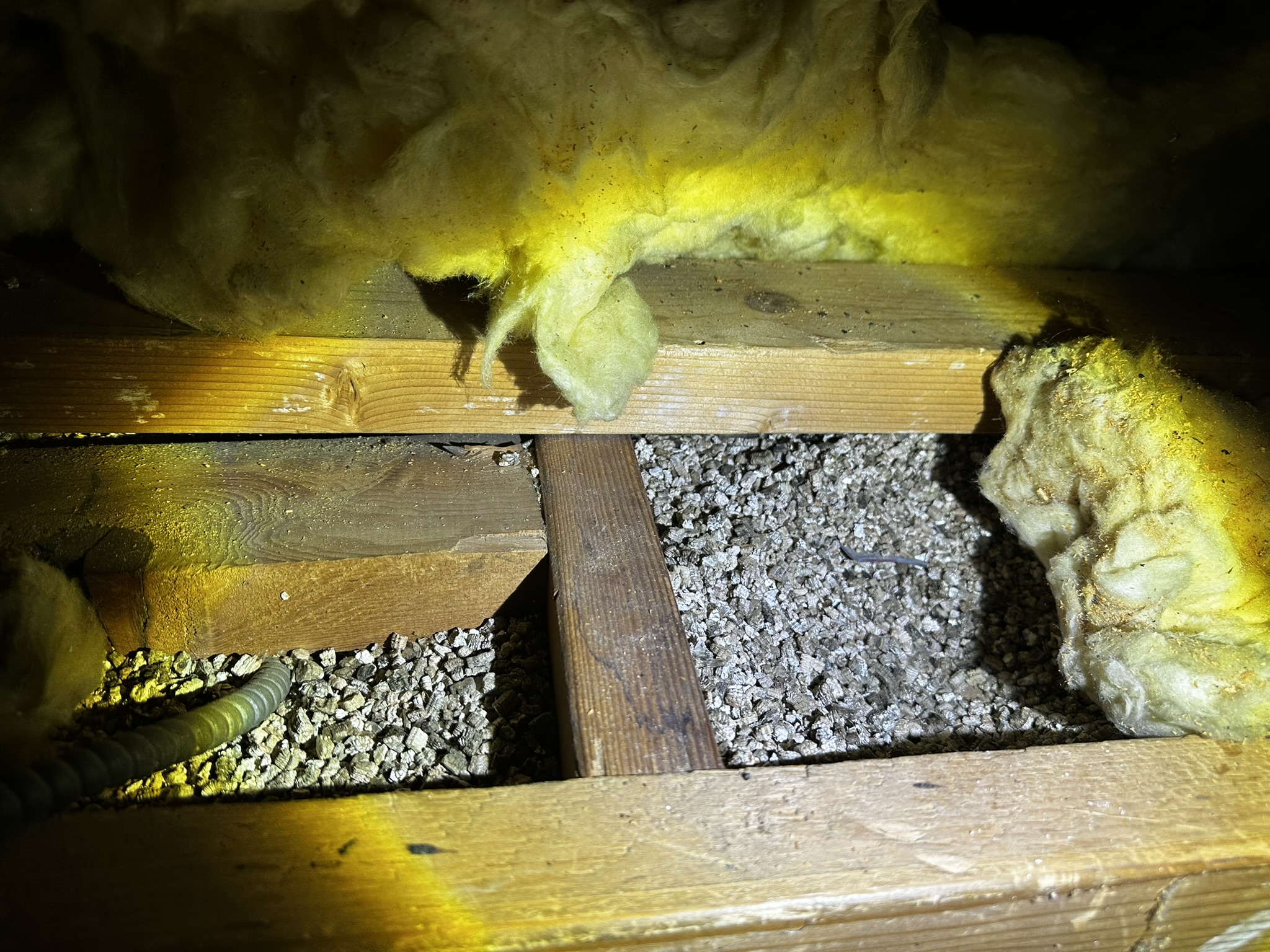
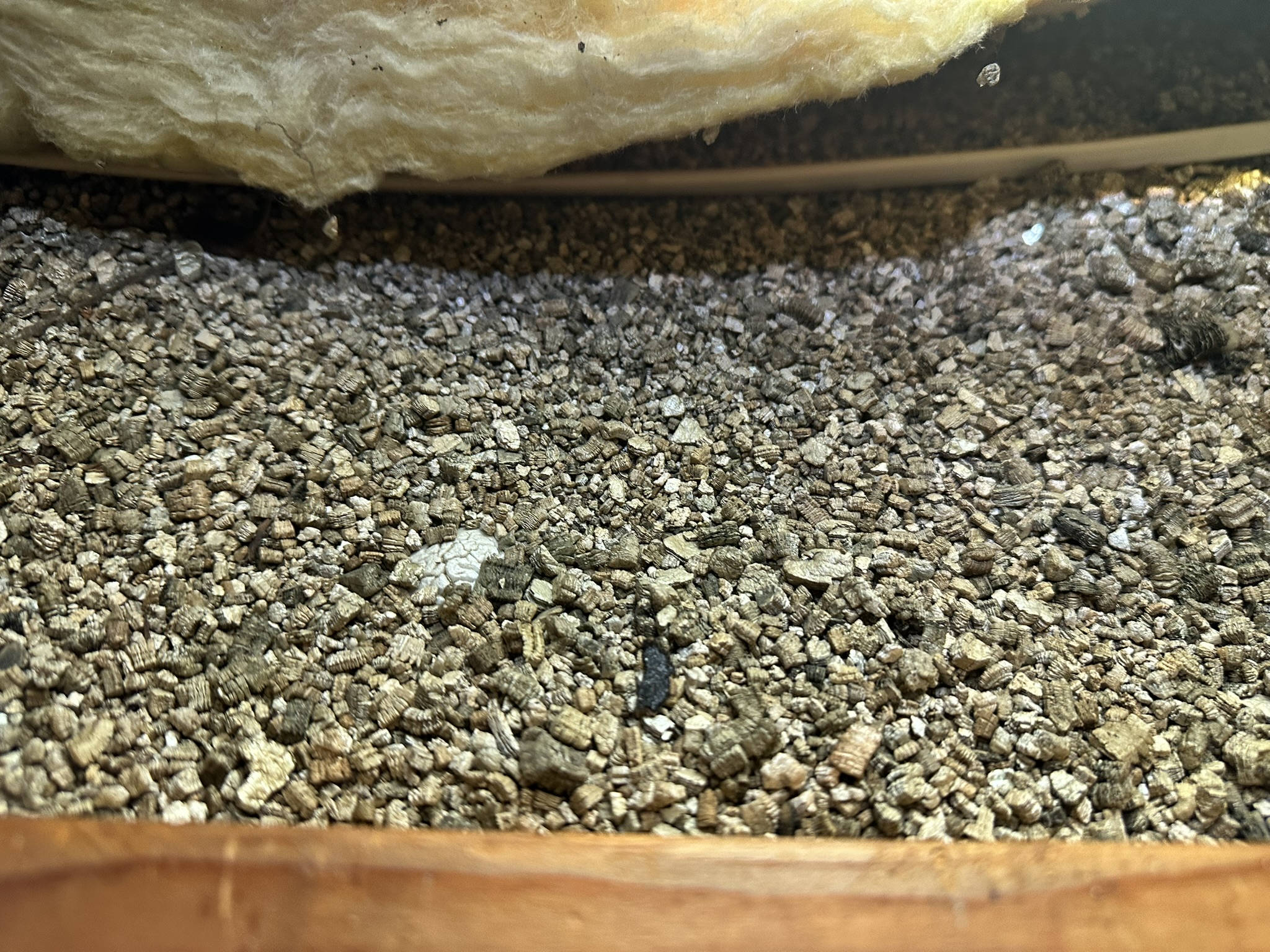
Vermiculite Insulation Examples
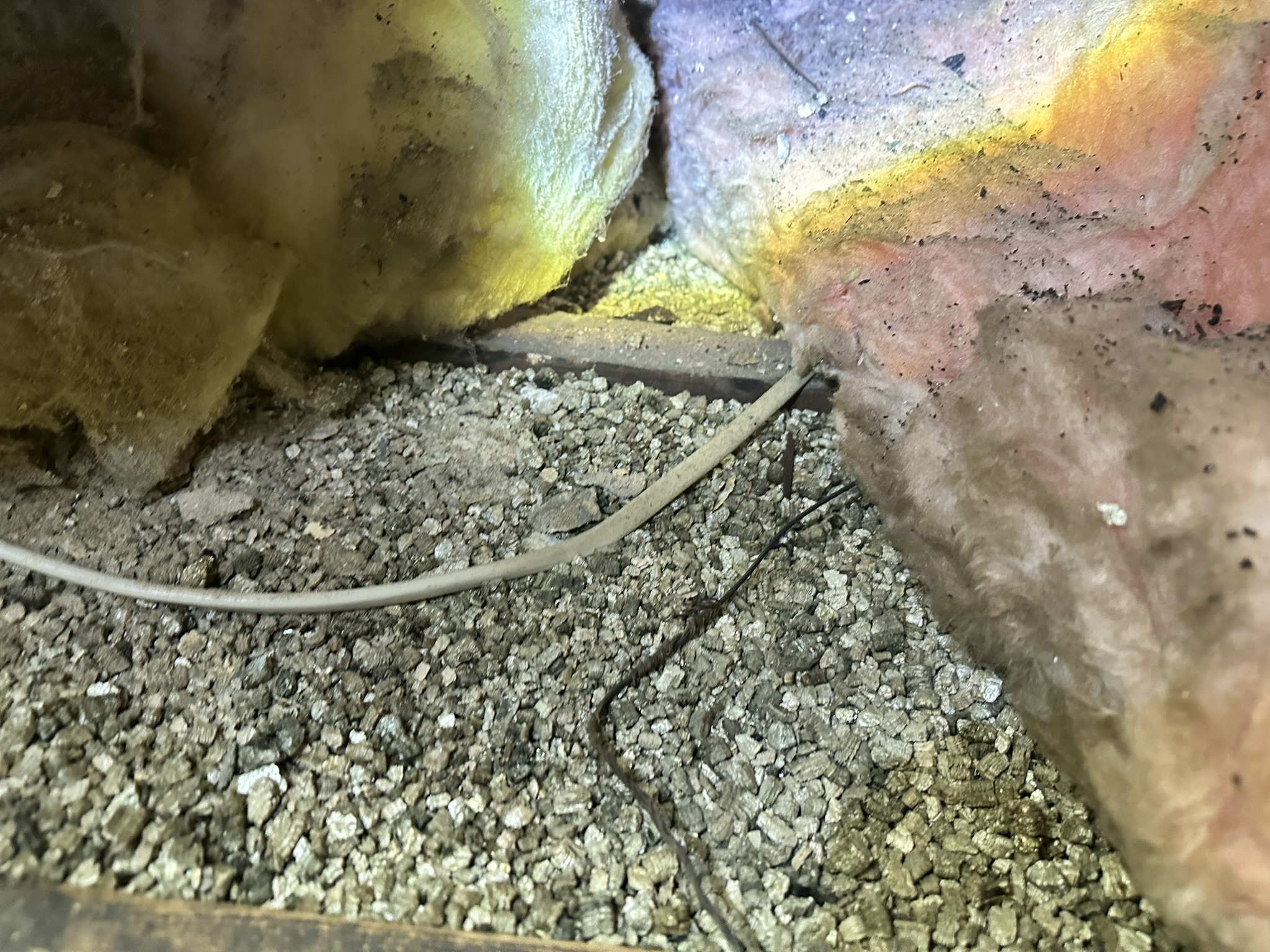
Identification & Safety
There are several ways to identify vermiculite:
Visual Identification:
- Look for gray or silver metallic granules in your attic
- Size ranges from cat litter to popcorn kernels
- It's NOT fiberglass (which is pink, yellow, or white)
- May reflect light when you shine a flashlight on it from certain angles
- Appears as loose-fill insulation, not batts or rolls
Common Discovery Methods: Most homeowners discover vermiculite when:
- A contractor (roofer, HVAC technician, or mold inspector) spots it during a service call
- They personally inspect their attic and see the gray/silver granules
- They find old insulation bags left in the attic labeled "Zonolite," "asbestos insulation," or "vermiculite insulation"
Still Not Sure?
- Take photos and compare them to online images of vermiculite
- Send photos to professionals like us—we can usually confirm just by looking at them
- Schedule a free professional inspection
No, not all vermiculite contains asbestos, but there's a significant risk. Much of the vermiculite insulation installed in U.S. homes from the 1920s through the early 1980s came from a mine in Libby, Montana, which was heavily contaminated with asbestos—particularly the popular Zonolite brand.
Important Wisconsin-Specific Information: In Wisconsin, vermiculite is assumed to be asbestos-containing material by law, regardless of whether it's been tested. Many states have moved away from this classification, but Wisconsin still treats it as hazardous and requires proper handling and disposal.
The reality is that vermiculite sometimes contains less than 1% asbestos, and sometimes it's not even asbestos at all—it's only considered asbestos because the same equipment was used during manufacturing. However, due to the risk and state regulations, we treat all vermiculite as if it contains asbestos.
Testing is not necessary in Wisconsin because vermiculite is assumed to be an asbestos-containing material by state law. Whether it tests positive for asbestos or not, it must be handled and disposed of using the same safety protocols.
Testing would add time and expense without changing how we approach the removal, so we don't typically recommend it for residential properties.
Generally, yes—with important caveats.
If the vermiculite is in your attic and completely undisturbed, it poses minimal risk. The danger comes from disturbing it, which releases asbestos fibers into the air.
However, you should consider removal if:
- You're planning any renovation or roof repair that will disturb the insulation
- There's been ceiling damage (water leak, structural collapse, fire)
- You need to access the attic frequently for storage or maintenance
- You're preparing to sell your home (buyers often request removal)
- You are updating electrical lines and an electrician needs access to the attic and will be cutting into the ceiling and potential insulation would fall
- The insulation has already been disturbed
- You simply want peace of mind
Emergency Situations: The only time vermiculite removal becomes truly urgent is if your ceiling collapses or is damaged, causing vermiculite to fall into your living space. In that case, it should be treated as an emergency situation requiring immediate professional attention.
Vermiculite insulation has distinct visual characteristics:
Color & Texture:
- Gray, silver, or silver-metallic color
- Granular, pebble-like appearance
- Sometimes appears shiny or reflective when light hits it at certain angles
- Loose-fill material (not in batts or rolls)
Size:
- Particles range from very small (like cat litter) to larger pieces (like popcorn kernels)
- Individual granules are irregular in shape
- The depth in attics typically ranges from 3-8 inches, though it varies
What It's NOT:
- NOT pink, yellow, or white (that's fiberglass)
- NOT fluffy or cotton-like (that's cellulose or fiberglass)
- NOT solid boards or sheets (that's rigid foam)
Historical Clues: Sometimes installers left empty bags in the attic. These bags may be labeled:
- "Zonolite"
- "Vermiculite insulation"
- "Asbestos insulation"
If you find bags with these labels, you almost certainly have vermiculite.
There are two main testing methods:
- Air Quality Testing:
- Takes air samples from your living spaces
- Samples are analyzed in a lab for asbestos fiber content
- Most accurate way to determine if fibers are present in the air
- Recommended if you've had a ceiling collapse or significant disturbance
- Tape Sampling:
- We take something like a mailing label and rub it across horizontal surfaces
- Surfaces include carpeting, furniture tops, HVAC registers, countertops
- The tape is then analyzed by our lab
- Useful for detecting settled dust and fibers
- Less expensive than air testing
- Good for checking if contamination spread after a disturbance
When Testing is Recommended:
- After any event that disturbed vermiculite (ceiling damage, water leak)
- If vermiculite has fallen into living spaces
- Before moving back into a home after remediation
- If you're experiencing unexplained respiratory symptoms (though you should consult a doctor first)
If contamination is found, we can remediate the affected areas with additional cleaning and HEPA vacuuming.
Health Risks & Concerns
Asbestos exposure can lead to three serious health conditions:
- Asbestosis
- Scarring of lung tissue
- Makes breathing progressively more difficult
- Caused by prolonged exposure to asbestos fibers
- No cure, only symptom management
- Lung Cancer
- Can develop years or decades after exposure
- Risk increases significantly for smokers
- Symptoms often don't appear until cancer is advanced
- Mesothelioma
- Cancer of the lining of the lungs (pleura) or abdomen
- Almost exclusively caused by asbestos exposure
- Very aggressive and difficult to treat
- Can develop 20-50 years after exposure
Important Context: These conditions typically develop after prolonged, repeated exposure—usually occupational exposure over many years. Brief, one-time exposure (like walking through an attic with vermiculite) is much lower risk, though any exposure should be avoided.
If you discover vermiculite in your home, don't panic. Simply avoid disturbing it and contact professionals for safe removal.
First, take a breath. Finding vermiculite doesn't mean you've been significantly exposed or that you'll develop health problems.
Consider These Facts:
- Vermiculite in an undisturbed attic poses minimal risk
- Health problems from asbestos typically require prolonged, repeated exposure
- Brief or incidental exposure carries much lower risk
- Most homeowners who discover vermiculite have not had dangerous levels of exposure
What You Should Do:
- Don't panic – The presence of vermiculite doesn't equal exposure
- Don't disturb it – Avoid going into the attic or doing any work that might disturb the insulation
- Contact professionals – Schedule an inspection and removal when appropriate
- Talk to your doctor – If you're concerned about past exposure, discuss screening options with your physician
Screening Options: Some people ask about cancer screening after discovering vermiculite. This is a conversation to have with your doctor, who can assess your individual risk factors and exposure history. General health anxiety about vermiculite doesn't necessarily warrant screening, but your doctor can provide personalized guidance.
During the removal process, we ask that you secure your pets for several reasons:
Safety During Removal:
- We'll have doors or windows open for ventilation and equipment
- We can't be responsible for pets escaping
- The noise from equipment may frighten animals
- We don't have time to chase animals during the work
Exposure Risk: Before removal, pets in the home have the same minimal risk as humans—if the vermiculite is undisturbed in the attic, exposure is unlikely. After professional removal with proper containment, there should be no increased risk to pets.
Best Practice:
- Keep pets in a secure room or crate during removal
- Or have them stay elsewhere for the day
- Ensure they can't access the work area
After Removal & Replacement
Our removal process has seven key stages:
Stage 1: Initial Assessment (1-2 hours)
- Climb into attic for visual inspection
- Photograph the vermiculite
- Take attic dimensions
- Measure depth of vermiculite
- Identify obstacles (ductwork, antennas, narrow spaces)
- Check ventilation and look for other hazards (mold, structural issues)
- Determine if other insulation is present (which would also be contaminated)
Stage 2: Project Planning & Permitting (1-2 days)
- File required notifications with Wisconsin DHS
- File with DNR for commercial projects
- Coordinate dumpster delivery
- Alert certified landfill 24 hours in advance
- Provide written estimate and timeline
Stage 3: Site Preparation (Day of Work - Morning)
- Lay down floor protection
- Set up containment chamber around attic access
- Install negative air machines
- Post caution tape and safety signage
- Crew dons full PPE (fit-tested respirators, Tyvek suits)
Stage 4: Extraction (1-3 days depending on size)
- Position gas-powered extractor outside
- Run 6-inch plastic tubes from attic through window/door to dumpster
- Vacuum vermiculite into sealed bags inside lined dumpster
- Hand-bag any batt insulation or material that can't be vacuumed
- Work systematically to ensure complete removal
Stage 5: Cleanup (Same day as extraction)
- HEPA vacuum all surfaces where vermiculite was present
- Clean trusses, joists, and any exposed areas
- Remove PPE within containment area
- Seal all bags in dumpster
- Cover dumpster with plastic layer (creating a giant sealed bag)
Stage 6: Air Quality Testing (Optional - 1-2 days)
- Take air samples from attic and/or living spaces
- Send samples to certified lab
- Wait for results
- If fibers detected (very rare), return for additional cleaning at no charge
Stage 7: Documentation & Disposal (1-2 days)
- Transport dumpster to certified asbestos landfill
- Materials are buried at the landfill
- Provide waste manifest documenting proper disposal
- Supply invoice and completion documentation
- Zero-balance statement upon full payment
- Lien waiver available if requested
Typical Timeline:
Most Residential Projects: 1-2 Days
- Average home (1,200-1,800 sq ft)
- Standard attic access
- Vermiculite only, no other contaminated insulation
- No unusual obstacles
Larger Projects: 3-4 Days
- Homes over 2,500 sq ft
- Very deep vermiculite (8+ inches)
- Other insulation present that must be hand-bagged
- Difficult access or unusual obstacles
Factors That Extend Timeline:
- Batt insulation on top of vermiculite – Must be hand-bagged, which takes significantly longer. One recent project had 7 inches of batt insulation on top of 4 inches of vermiculite. Hand-bagging the batt insulation alone took two-thirds of a day.
- Narrow or restricted access – If the attic space is so narrow that even a small person can barely fit through
- Obstacles – Old TV antennas, extensive ductwork, stored items
- Floorboards – If boards have been installed over the vermiculite for storage, they must be removed first
- Multiple attic spaces – Some homes have separate attic areas that aren't visible from the main access
If You're Adding New Insulation: Blown-in insulation installation adds another half-day to one day, plus prep work time for:
- Sealing air gaps
- Installing or repairing baffles
- Covering non-UL-rated can lights
- Ensuring proper ventilation
No, you can stay in your home. We set up full containment to prevent any vermiculite or dust from entering your living spaces.
What We Ask:
- Don't enter the containment area or work zones
- Understand there will be noise during the work
- Have pets secured (they can't access work areas)
- Clear a path for our equipment and hoses
About the Noise: Most of the noise comes from the gas-powered extractor, which stays outside the home. It's loud, but it's not inside with you. Many homeowners work from home during the project without major issues, though some prefer to work elsewhere for the day if they're sensitive to noise.
Overnight: We typically work during daytime hours (usually 8am-5pm). You can access your entire home normally when we're not there. We secure the containment area overnight.
We use professional-grade equipment specifically designed for asbestos abatement:
Primary Extraction Equipment:
- Gas-powered insulation vacuum – Large, heavy, on wheels; stays outside the home
- 6-inch plastic coil tubes – Extremely thick, runs from attic to machine to dumpster
- 500 CFM HEPA vacuums – For cleanup of residual dust
Safety & Containment:
- Negative air machines – Create negative pressure to prevent fiber migration
- Containment chamber materials – Plastic sheeting, frames, and seals
- Floor protection – Protective coverings for all work areas
- PPE (Personal Protective Equipment):
- Fit-tested respirators (properly sealed, not just N95 masks)
- Full Tyvek suits (removed before leaving containment)
- Gloves and boot covers
Disposal:
- Lined dumpsters – 6-mil plastic on all sides
- Heavy-duty disposal bags – Very large (not standard hefty bags)
- Sealing materials – For properly closing bags and dumpster
The key difference between our equipment and what a DIYer might use:
- Our respirators are fit-tested to ensure proper seal (facial hair, improper fit, or using just an N95 can be dangerous)
- Our extraction system is powerful enough to lift vermiculite through long hoses
- We use professional-grade HEPA filtration
- Our disposal methods meet state and federal requirements
We use a multi-layered approach:
- Containment Chamber:
- Creates a sealed work zone around the attic access
- Prevents any fibers from escaping into living spaces
- Physical barrier between work area and occupied spaces
- Negative Air Machines:
- Installed at the bottom of the containment area
- Create negative pressure (air flows INTO the work zone, not out)
- If any breach occurred, air would flow toward the work area, not into your home
- Run continuously during active work
- Extraction System:
- Sealed tubes run from attic through containment to exterior
- Vermiculite goes directly from attic into sealed bags in dumpster
- Very limited dust during extraction due to vacuum system
- HEPA Vacuuming:
- After extraction, we HEPA vacuum all surfaces
- Captures microscopic particles
- Ensures thorough cleanup
- Air Testing (Optional):
- Can test air quality before and after to verify cleanliness
- Provides documented proof that work was done safely
This comprehensive approach ensures that vermiculite stays contained throughout the entire process—from initial extraction through final disposal.
Yes, air quality testing is available both before and after removal.
When We Test Before Removal:
- If there's a contaminated area (like a ceiling that collapsed)
- To document baseline asbestos levels before work begins
- To show contamination levels that require remediation
After Removal Testing: We perform air quality testing after removal to:
- Prove everything was done safely and effectively
- Verify no asbestos fibers remain in the air
- Provide documentation for your records
- Give you peace of mind
Is Testing Required? Testing is optional for most single-family homeowners. It's recommended by us and by the state, but not legally required.
Testing is required when:
- A tenant occupies the building (rental properties)
- It's a commercial building
- It's a school or daycare facility or medical facility
What If Fibers Are Detected? It's a very rare occurrence, but if asbestos fibers are detected after our removal:
- We return at no additional charge
- HEPA vacuum all surfaces completely again
- Run another air sample test
- Repeat until air quality passes
There's no additional charge to the property owner if we need to return for re-cleaning.
Please complete these steps before our crew arrives:
Attic Preparation:
- Remove valuables from the attic – Anything you don't want handled or potentially damaged should come down
- Clear stored items from attic access area – We need room to set up containment
- Ship valuables to a safe location – We don't want our team responsible for moving anything valuable
Driveway & Access:
- Clear driveway for dumpster – Dumpster typically needs to be placed in driveway
- In cities or areas without driveways, it may go on the front yard, alley, or street
- Make sure that the driveway is clear of obstacles or debris so that we can get the dumpster and/or work vehicles as close to the structure as possible
- Move vehicles – No vehicles should be in the way
- Clear path from attic to exit – We need a clear route for our hoses from attic to window/door
- During the winter please make sure that the driveway and/or sidewalk or any area where our crew will be accessing is clear of any snow and/or ice.
Pets & Valuables:
- Secure all pets – In crates or closed rooms, or have them stay elsewhere
- We have doors/windows open during work
- We cannot be responsible for pets escaping
- We don't have time to chase animals
- Remove loose cash or valuables from sight – While all our employees are background-checked and trustworthy, we don't want anyone ever accused of anything
Work-From-Home Considerations:
- Plan for noise – The gas-powered extractor is loud (though outside)
- Consider working elsewhere – Many people prefer to work at a coffee shop or office for the day
Clear Communication:
- Inform us of any special circumstances – Alarm systems, difficult access, pets with special needs, etc.
- Be available by phone – In case we discover anything unexpected
Yes, you can stay in the property during removal.
What We Ask:
- Don't come into our containment area or work zones
- Be aware of noise from equipment
- Keep pets secured away from work areas
- Allow us clear and safe access to the work route
Why It's Safe to Stay:
- Full containment prevents any vermiculite from entering living spaces
- Negative air pressure ensures airflow is controlled
- Proper PPE protects our workers
- Most noise and activity is in the attic and outside
Who Typically Stays vs. Leaves:
- Many homeowners stay – Especially retirees or those who don't mind the activity
- Work-from-home individuals – About 50/50; some stay, some prefer to work elsewhere for the day
- Families with young children – Often choose to leave for the day for convenience
Overnight: You have full access to your home when we're not actively working. We secure the containment area at the end of each day.
Disposal Process:
- Sealed Containment:
- Vermiculite is vacuumed directly into large, heavy-duty sealed bags
- Bags are placed inside a dumpster that's been lined with 6-mil plastic on all sides
- Very limited dust during this process due to our vacuum system
- Secure Packaging:
- Once all bags are filled and properly sealed
- We place a plastic cover over the top of the entire dumpster
- This essentially creates a "giant sealed bag" inside the dumpster
- Nothing can escape during transport
- Certified Disposal:
- Dumpster is transported to a certified asbestos landfill
- These are special landfills licensed to accept asbestos waste
- Not all landfills can accept asbestos materials
- Landfill Notification & Burial:
- We alert the landfill 24 hours before delivery
- The landfill prepares a proper site dug out specifically for asbestos waste
- Vermiculite is buried in this designated area
- Materials remain buried permanently
- Documentation:
- We create a waste manifest – a document that tracks the disposal from your home to the landfill
- Shows that materials were properly disposed of
- Confirms the landfill that received the waste
- Ensures everything was done according to regulations
- Copy available to you upon request (we keep it on file)
This chain of documentation ensures complete accountability from removal through final disposal.
Costs & Pricing
Typical Price Ranges:
Most Common Range: $3,500 - $7,500
- Average residential home (1,800 square feet)
- Standard attic with normal access
- 4-6 inches of vermiculite
- No unusual complications
Lower End: As low as $2,500
- Very small project
- Easy access
- Minimal vermiculite
- No other contaminated insulation
Higher End: $14,000+
- Very large homes (one recent quote was for an 80-foot-long attic)
- Deep vermiculite (8+ inches)
- Large amounts of contaminated batt insulation on top
- Difficult access requiring ceiling removal
Minimum Fee: $650
- Applies to very small jobs
- Example: A planter box in an entryway that can be scooped into a bag in 45 minutes
- Note: For typical attic removal requiring our extraction machine, the minimum would be higher
Why Can't You Give an Exact Price? Every job is truly unique. We quote by the job, not by square foot, because:
- Vermiculite depth varies (might be 4 inches near the access but 8 inches deeper in)
- Access challenges differ dramatically between homes
- Some homes have other contaminated insulation that must also be removed
- Obstacles increase labor time
- Some projects require ceiling removal from below
What's Included in Our Estimates:
- All labor for removal
- All equipment and materials
- Dumpster and disposal fees
- Required permits/notifications (DHS, DNR)
- Waste manifest and documentation
- Travel to/from job site
Primary Cost Factors:
- Size of Attic:
- Square footage of the space
- Larger attics require more time and more bags
- More vermiculite = higher disposal costs
- Depth of Vermiculite:
- Can range from 3 inches to 12+ inches
- Depth often varies within the same attic
- More material = more extraction time
- Access Challenges:
- Standard attic access – Walk-up or pull-down stairs are easiest
- Narrow scuttle access – Small openings make equipment positioning difficult
- Very low ceiling height – Workers can barely crawl, slowing everything down
- Extremely narrow spaces – Some attics are so tight that even small people can't fit through
- Multiple attic spaces – Separate areas requiring separate setup
- Obstacles:
- Old TV antennas from the 1960s-70s
- Extensive ductwork
- Low-hanging wires or pipes
- Items stored in attic that homeowner didn't remove
- Structural beams or trusses that create difficult navigation
- Other Contaminated Insulation:
- Batt insulation on top – Must be hand-bagged (cannot be vacuumed)
- Example: 7 inches of batt insulation took two-thirds of a day to hand-bag
- Blown-in fiberglass mixed with vermiculite – Considered contaminated
- Any insulation in contact with vermiculite – Must be removed as contaminated material
- Structural Complications:
- Floorboards over vermiculite – Must be removed first
- Finished attic areas – May require more careful work
- Inaccessible areas – May require cutting ceiling from below
- Project Specifics:
- Required permits and notifications (cost passed through to customer)
- Distance to certified landfill
- Dumpster size needed
- Seasonal factors (extreme weather may require additional labor or hazard pay)
Example from Real Projects:
Project A: $3,500
- 1,200 sq ft home
- 4 inches of vermiculite
- Easy access
- No obstacles
- Completed in 1 day
Project B: $14,000
- 80-foot-long attic
- Only 4 inches of vermiculite
- Batt Insulation over top of vermiculite which needs to also be removed
- Extremely large square footage
- Just removal (no new insulation)
This shows that square footage can matter more than depth in some cases.
Our Pricing Method: Quote by Job (Time & Materials)
We do not charge by square foot because that doesn't account for all the variables that affect project difficulty and duration.
Why Not Square Foot Pricing?
- Vermiculite depth varies within the same attic
- A 1,000 sq ft attic with 4 inches of vermiculite near the access might have 8 inches deeper in
- Obstacles dramatically affect labor time
- Access challenges can't be factored into square footage
- Other contaminated insulation isn't reflected in square footage
How We Quote:
- On-site inspection – We physically inspect your attic
- Assess all factors – Size, depth, access, obstacles, other insulation
- Calculate time and materials – Based on actual conditions
- Provide written estimate – Detailed, upfront pricing
- No surprises – The quote is the price (unless you approve additional work)
Industry Standard: This is pretty typical for the vermiculite removal industry. Every job is unique, so most reputable companies quote by the job rather than using a simple square-foot formula.
What About Hourly Rates? We don't charge by the hour either. We estimate the total time required and provide a flat project price. This protects you from unexpected overruns and gives you price certainty upfront.
Generally, no. We provide upfront pricing and rarely need to increase costs.
When Additional Charges Might Occur:
Legitimate Discoveries:
- Hidden room or attic space – Not visible during initial inspection until insulation is removed
- Additional vermiculite area – Extended further than was visible from the access point
- Uncapped plumbing – Example: We discovered pipes that were never properly capped (just had rags stuffed in them). The homeowner needs to hire a plumber to cap them properly. Not our fault, but something that gets discovered during the work.
Important Safeguard: Any additional charges are discussed and approved by you in advance. You'll never get a surprise bill at the end. If we discover something unexpected, we:
- Stop work in that area
- Contact you immediately
- Explain what we found
- Provide a price for the additional work
- Get your approval before proceeding
What's Included in Original Estimate:
- All labor for the scope inspected
- All equipment and materials
- Dumpster and disposal
- Required permits/notifications
- Documentation and waste manifest
- Standard cleanup and HEPA vacuuming
Very Rare Increases: In our experience, we've "really never had to increase" costs on projects. The initial inspection is thorough enough to identify the scope accurately.
No, we do not offer in-house financing.
Payment Options:
- Pay in full upon completion
- Pay via check, cash, or credit card
- Work with your own bank for a home equity line or personal loan
- Use your insurance settlement if applicable
For Large Projects: If you need financing for a large vermiculite removal project, we recommend:
- Home equity line of credit (HELOC)
- Personal loan from your bank
- Credit card (if you have rewards or 0% intro APR)
- Insurance payment (if part of a claim)
Payment Timeline:
- We typically require payment in full upon project completion
- You'll receive a zero-balance statement once paid
- We can provide a lien waiver if requested by your bank or mortgage company
Minimum Fee: $650
However, this really applies to very small, non-attic jobs that don't require our large extraction equipment.
Example of Minimum Fee Job:
- A planter box in an entryway filled with vermiculite
- Can be scooped into a bag by hand
- Completed in 45 minutes
- Doesn't require the gas-powered extractor
For Attic Removal: Realistically, if we need to bring the extraction machine and set up full attic containment, the minimum cost would be higher than $650. Most attic projects fall into the $3,500-$7,500 range. We typically require a 50% down payment.
Why the Minimum?
- Equipment costs (even for small jobs)
- Labor time and travel
- Proper disposal at certified landfill
- Required permits and notifications
- Overhead and insurance costs
Even a "small" vermiculite job involves significant setup, specialized equipment, certified disposal, and professional expertise.
Insurance & Financial Assistance
It depends on the circumstances and how your policy is written.
Usually Covered:
- Part of a larger claim – Water damage, fire damage, mold remediation
- Ceiling collapse – Emergency situation where vermiculite falls into living space
- Roof damage – If roof work disturbs or damages vermiculite
Usually NOT Covered:
- Elective removal – If you simply want it removed for peace of mind
- Pre-sale removal – Removing it to sell your home
- Upgrade/renovation – Choosing to remove it as part of a planned project
The Key Distinction: If vermiculite removal is necessary because of an insured event (water damage, fire, structural failure), there's a good chance it's covered. If you're choosing to remove it voluntarily, it's typically not covered.
How We Help with Insurance:
- Work directly with insurance adjusters
- Write estimates in Exactimate format – the industry-standard software that insurance companies and adjusters use
- Provide detailed documentation
- Coordinate with your adjuster on scope and pricing
- Follow insurance company requirements and procedures
Our Recommendation: If you think your situation might involve insurance:
- File a claim with your insurance company
- Have them send an adjuster to assess
- Contact us for an estimate
- We'll work with your adjuster to help in the likelihood of having proper coverage
Yes, there is one significant Federal program:
Zonolite Attic Insulation Trust (ZAI Trust)
- Website: ZAITrust.com (Z-A-I Trust dot com)
- Type: Federal program (not state or local)
- Coverage: May reimburse up to 55% of vermiculite removal costs
- Requirement: Your vermiculite must be confirmed Zonolite brand
How It Works:
- Determine if your vermiculite is Zonolite brand
- Apply to the ZAI Trust program
- Get approved before removal (follow their specific process)
- Complete removal with a certified contractor (like us)
- Submit documentation to the Trust
- Receive reimbursement (typically up to 55% of costs)
Important Notes:
- Approval amounts vary by situation
- Not all vermiculite qualifies (must be Zonolite)
- There's an application process with specific requirements
- Reimbursement happens after removal is complete
- The program has specific documentation requirements
No Other Wisconsin Programs: As of our last update, there are no specific state of Wisconsin or county-level programs for vermiculite removal assistance. The ZAI Trust is the primary financial assistance available.
Our Role: We can help provide documentation needed for the ZAI Trust application, including:
- Confirmation that material is vermiculite
- Detailed estimates
- Completion certificates
- Waste manifests
- Photos and project documentation
Yes, we actively help with insurance claims.
How We Assist:
- Estimating Software:
- We use Exactimate – the same estimating software used by most insurance companies
- This makes our estimates immediately understandable to adjusters
- Reduces back-and-forth and speeds up approval
- Ensures we're speaking the same "language" as the insurance company
- Direct Communication:
- We work directly with your insurance adjuster
- Explain the scope of work needed
- Justify our pricing and approach
- Answer technical questions
- Provide additional documentation as needed
- Proper Documentation:
- Extensive photo documentation
- Detailed written estimates
- Proper categorization of work
- Clear line items
- All required certifications and licenses
- Format Compliance:
- Write estimates in the format insurance companies want to see
- Include all necessary detail levels
- Properly code each aspect of the work
- Ensure nothing is missed that should be included
- Coordination:
- Schedule inspections when the adjuster needs to see the damage
- Provide timely responses to adjuster questions
- Keep you informed throughout the process
- Help ensure you get fair coverage
Our Experience: We've worked with insurance companies on many projects, particularly when vermiculite removal is part of:
- Water damage restoration (roof leaks, plumbing failures)
- Fire damage remediation
- Mold remediation projects
- Storm damage repairs
This experience means we understand what insurance companies need and how to help you get appropriate coverage.
The Removal Process
We strongly recommend replacing insulation, and here's what we offer:
Recommended Replacement: Blown-In Insulation
Two Main Types:
- Cellulose – Made from recycled paper products
- Fiberglass – Spun glass fibers
Both are effective and meet current building codes.
Required R-Value in Wisconsin:
- Minimum: R-49 – Required by current Wisconsin building code
- Thickness: Between 18-19 inches of blown-in fiberglass
- Optional: R-60 – Some customers choose this higher level for maximum efficiency
- R-60 Thickness: Between 22-23 inches of blown-in fiberglass
What's Included with Installation:
Preparation Work:
- Seal all air gaps – Spray foam around penetrations, wiring, pipes
- Can light covers – Must verify can lights are UL-rated for insulation contact
- If not UL-rated, we install fire-resistant covers over them
- Prevents fire hazard from new insulation
- Install baffles – Ensures proper ventilation from soffit to ridge
- Soffit ventilation – Make sure blown-in insulation won't block soffit vents
- Make attic more energy efficient – Comprehensive approach to insulation
Timeline:
- Prep work: Several hours
- Blowing in insulation: Half a day to one day (much faster than removal)
- Total additional time: Generally adds one full day to project
If You Choose Another Contractor: If you want spray-in foam or another type of insulation we don't offer:
- We can recommend looking on Google for spray-in installation
- You'll need to coordinate timing between our removal and their installation
- Make sure they're properly licensed and insured
Important Code Requirement: If we're doing the installation work, it must meet minimum current Wisconsin building code (R-49). We won't install below code. If you're doing it yourself, you can do whatever you want, but we recommend meeting or exceeding code for efficiency and resale value.
It depends on the season:
Cold Weather Removal (Fall/Winter/Early Spring): YES – Replace immediately
- Your home will lose heat rapidly without attic insulation
- Heating bills will skyrocket
- Pipes might freeze in extreme cold
- Home will be uncomfortable
- Energy waste is significant
Warm Weather Removal (Late Spring/Summer/Early Fall): NO – You can wait
- Home won't lose heat as rapidly
- Air conditioning will work harder but it's manageable
- You can wait for better pricing or scheduling
- Some people wait until fall to install new insulation
Wisconsin-Specific Consideration: In Wisconsin's climate, timing matters. If we remove vermiculite in:
- November-March: Definitely need immediate replacement
- April-May: Probably want to replace fairly soon
- June-August: Can wait if needed
- September-October: Should replace before cold weather hits
Storage Space Consideration: If you've been using your attic for storage, you'll need to think about what you want after new insulation is installed.
- Blown-in fiberglass is light and fluffy – You don't want to compact it by walking on it or storing heavy items on it
- You'll lose some storage space – Either don't store things in the attic, or
- Build a platform – Have a carpenter (or do it yourself if handy) build a raised platform over some of the insulation so you can use that area for storage
The new insulation depth (18-23 inches) means you can't just walk around and store boxes everywhere like you might have before.
We offer blown-in insulation installation ourselves.
What We Provide:
- Full-service from removal through re-insulation
- One contractor for the entire project
- Seamless coordination (no gaps between removal and installation)
- Everything done to current Wisconsin building code (R-49 or R-60)
- All prep work included (air sealing, baffles, can light covers)
Services We Don't Offer:
- Spray-in foam insulation – We don't have the equipment or expertise for this
- Batt insulation installation – We focus on blown-in products
If You Want Spray-In Foam:
- We recommend searching Google for "spray-in insulation" in your area
- You'd need to coordinate timing between our removal and their installation
- Make sure they're properly licensed and insured
- We probably won't look into offering this in the future (it's specialized equipment)
Advantages of Using Us for Both:
- Single point of contact
- Coordinated scheduling
- Better understanding of your specific attic
- We already know the space from the removal
- No miscommunication between contractors
- One warranty/guarantee for the entire project
No, proper professional removal should not damage your home.
What We Protect:
During Removal:
- Lay down floor protection along all work routes
- Seal containment area to prevent dust/fiber migration
- Use controlled extraction to minimize any disturbance
- Remove all materials through designated path
Standard Operations:
- No damage to drywall or ceilings (unless they need removal for access)
- No damage to floors or carpets (we protect them)
- No damage to attic structure (trusses, joists remain untouched)
- No damage to wiring or ductwork (we work around them carefully)
Situations That Require Intentional "Damage":
- Inaccessible Areas: If vermiculite is in an area so narrow or tight that we cannot access it from above:
- We discuss this with you before starting
- We may need to remove ceiling from below to access it
- You'd need to hire a separate contractor to repair the ceiling afterward
- This is disclosed and approved in advance
- Wall Removal: If vermiculite is in wall cavities:
- We need to cut out at least a 1-foot section of wall from the ground up
- You'd need a to repair the drywall/plaster afterward
- Again, discussed and approved in advance
- Floorboards: If floorboards have been installed over vermiculite in the attic:
- We may need to remove them to access vermiculite underneath
- We can sometimes reinstall them, but they may not go back perfectly
- Discussed in advance
Post-Project: After removal and cleanup, your home should be in the same condition as before—minus the vermiculite. The attic space will be clean, empty, and ready for new insulation or work to be done by an electrician or carpenter to enhance your property.
Removing vermiculite typically doesn't increase property value, but it maintains or protects your sale price.
Here's How:
Scenario 1: You DON'T Remove It Before Selling
- Home inspector discovers vermiculite during inspection
- Buyer gets concerned about asbestos
- Buyer asks for a credit or price reduction
- Typical reduction: $5,000-$7,500 (cost of removal)
- Or worse: Buyer walks away from the deal
- Your $450,000 sale price just dropped
Scenario 2: You DO Remove It Before Listing
- Home inspection finds no vermiculite
- No concern about asbestos to scare buyers
- No negotiations over removal costs
- Your asking price holds
- Sale proceeds smoothly
The Math: You're not increasing value by removing vermiculite. You're protecting your sale price from being reduced.
Think of it as maintaining value rather than increasing it.
Marketing Advantage: You can also market your home as:
- "Vermiculite-free"
- "No asbestos insulation"
- "Recently remediated attic with new R-49 insulation"
This gives buyers peace of mind and can make your home more attractive than similar homes that haven't addressed the issue.
For Rental Properties: If you own rental property, removing vermiculite:
- Eliminates a potential liability
- Removes a safety concern
- May be required if tenants become aware of it
- Protects you from future claims
Bottom Line: Vermiculite removal is rarely a value-add, but it's frequently a value-protector. It prevents your sale price from being reduced and eliminates a potential deal-killer.
Primary Benefit: Peace of Mind
The biggest immediate benefit is knowing that a potentially hazardous material has been safely and professionally removed from your home. This brings:
- Relief from worry and stress
- Confidence in your home's safety
- Ability to declare "no asbestos insulation" when selling
- Freedom to renovate or access attic without concern
Other Benefits:
- Improved Air Quality (in specific situations):
- If vermiculite was in wall cavities or ductwork, it can no longer circulate through your ventilation system
- Attic air is safer and cleaner
- No risk of fibers migrating into living spaces
- Safer Home Environment:
- Prospective buyers won't have concerns
- Children or grandchildren won't be exposed
- You can use your attic space safely
- Contractors can work in your attic without special precautions
- Ability to Upgrade:
- Can now install modern, efficient insulation
- Can renovate without special abatement procedures
- Can improve energy efficiency with proper insulation
- Mental/Emotional Benefits:
- No more wondering "what if"
- No guilt about potential exposure to family
- No anxiety about future health impacts
- Satisfaction of addressing a known issue
What It's NOT: It's not a health benefit in the sense of immediate physical improvement. If the vermiculite was undisturbed before removal, you likely weren't experiencing health impacts from it anyway.
The benefit is primarily preventative and psychological—eliminating a potential future hazard and the stress of knowing it's there.
Timing & Scheduling
Minimum: Two weeks
Typical Booking Timeline:
- Call us today → Schedule inspection this week
- Inspection completed → Provide estimate within 2-3 days
- Estimate approved → Schedule work 2 weeks out
- Total timeline → About 3 weeks from first call to completion
Sometimes Faster:
- If our schedule has an opening
- During slower seasons
- For emergency situations (ceiling collapse, water damage)
Sometimes Longer:
- Peak seasons (spring and fall)
- If you're waiting for insurance approval
- If you need to coordinate with other contractors
- If you choose to wait for better weather
Our Recommendation: Contact us as soon as you know you need removal. The earlier you call, the more flexibility we have with scheduling. Don't wait until you have a buyer's inspection scheduled or a renovation about to start.
Ideal Seasons: Spring and Fall
Why Spring & Fall Are Best:
Temperature:
- Moderate temperatures in the attic (60-80°F typically)
- Comfortable working conditions for our crew
- No extreme cold (frozen vermiculite)
- No extreme heat (120°F+ attic temperatures)
Worker Safety:
- No heat exhaustion risk
- No hypothermia risk
- Can work efficiently without breaks
- Standard labor rates (no hazard pay)
Material Behavior:
- Vermiculite isn't frozen to structure
- Flows properly through vacuum system
- Easy extraction
Seasons to Avoid (If Possible):
Summer (June-August):
- Challenge: Attic temperatures can reach 120°F+
- Impact: Need frequent crew breaks, rotation of workers
- Cost: May include hazard pay for extreme heat
- Duration: Project takes longer due to necessary breaks
- Note: We'll still do it if you need it, but we factor these challenges into the estimate
Winter (December-February):
- Challenge: Bitter cold temperatures
- Risk: Vermiculite can freeze and stick to structure
- Problem: Can't leave frozen vermiculite behind—we agreed to complete removal
- Temperature requirement: Attic needs to be above freezing for proper extraction
- Not "tropical" but can't be bitter cold
Does This Mean I Should Wait?
It's Safe to Wait If:
- Vermiculite is undisturbed in your attic
- No renovation or roof work planned
- No ceiling damage or water issues
- Not selling your home immediately
Example: If you discover vermiculite in June, you can safely wait until September or October. It's been there for decades—it's not going anywhere. It's not an emergency unless there's been a ceiling collapse or water damage.
Don't Wait If:
- Emergency situation (ceiling collapse, vermiculite in living space)
- Fire or water damage requiring immediate remediation
- Buyer inspection deadline
- Renovation scheduled to start soon
- Tenant safety concern
Work Year-Round: We do work year-round—we just price accordingly for extreme conditions. So if you need it done in summer or winter, we can do it. It just might cost a bit more and take a bit longer
Yes, we provide detailed written estimates for every project.
What's Included in Our Estimates:
Scope of Work:
- Detailed description of removal area(s)
- Amount of vermiculite (estimated)
- Any other contaminated materials to be removed
- Specific challenges or obstacles noted
Line Item Breakdown:
- Labor costs
- Equipment and materials
- Dumpster and disposal fees
- Permits/notifications (DHS, DNR)
- Air testing (if requested)
- New insulation (if requested)
Project Timeline:
- Estimated start date
- Duration of work (in days)
- Key milestones
- Expected completion date
- Any weather or seasonal considerations
Terms and Conditions:
- Payment terms
- What's included/not included
- Warranty information
- Insurance and licensing details
- Contact information
- Our estimates are valid for 45 days
Process:
- We complete the on-site inspection
- Take all measurements and photos
- Assess all factors affecting cost
- Prepare written estimate
- Send or present estimate to you (work with insurance adjuster if needed)
- Answer any questions
- Revise if needed based on your feedback
- Once approved, schedule the work
Estimate Validity: Our estimates are typically valid for 45 days, as material costs and disposal fees can change over time.
You'll receive several important documents:
- Copy of Your Contract:
- The original agreement we both signed
- Shows scope of work and pricing
- For your records
- Project Information/Completion Certificate:
- Confirms work was completed
- Date(s) of work
- Areas addressed
- Services performed
- Invoice:
- Itemized charges
- Payment received
- Any outstanding balance
- Zero-Balance Statement:
- Provided once you've paid in full
- Shows $0.00 owed
- Confirms account is settled
- Important for real estate transactions
- Waste Manifest (Upon Request):
- Documents proper disposal
- Tracks vermiculite from your home to landfill
- Shows which certified landfill received the material
- Proves materials were disposed of legally
- Many customers don't request this—they just trust we did it properly
- We keep it on file if you need it later
- Lien Waiver (Upon Request):
- Confirms we have no claim against your property
- Often required by mortgage companies
- Important for refinancing or sale
- Provided at no charge
- Air Quality Test Results (If Performed):
- Lab results showing air quality
- Before and after results if both were done
- Certification that space meets safety standards
Why This Documentation Matters:
- Real estate transactions – Proves the work was done properly
- Insurance claims – Provides documentation for reimbursement
- Peace of mind – You have proof of proper removal and disposal
- Future reference – If you sell the home, you can show buyers the documentation
- Legal protection – Demonstrates you addressed the hazard appropriately
We keep copies of all documentation in our files as well, so if you lose anything, we can provide replacements.
DIY vs Professional Removal
Technically yes—but we strongly do not recommend it.
Legal Situation: In Wisconsin, homeowners can legally work on their own homes without certification. You're allowed to remove vermiculite from your own residence if you choose.
Why We Don't Recommend DIY:
- Safety Risks:
- Improper respirator fit – N95 masks aren't adequate; you need fit-tested respirators with proper seal
- Facial hair – Prevents proper seal on respirators
- No seal = exposure – You're breathing asbestos fibers without realizing it
- Family exposure – You can carry fibers throughout your home on your clothing
- Technical Challenges:
- Proper containment – Difficult to set up effective containment without training
- Extraction equipment – Consumer vacuums can't handle the volume or create proper containment
- Disposal issues – Most landfills won't accept vermiculite from non-licensed contractors
- Cleanup standards – Hard to know when you've actually achieved clean conditions
- Legal/Disposal Issues:
- No access to certified landfills – They require proper licensing and documentation
- Where do you take it? – You can't just put it in your trash
- Improper disposal – Could face legal penalties
- No waste manifest – Can't prove proper disposal if needed later
- Hidden Costs:
- Proper respirators and fit testing
- Tyvek suits (disposable)
- Containment materials
- Heavy-duty bags
- Disposal fees (if you can even find a landfill that will take it)
- Potential health costs if exposed
- Effectiveness:
- No way to verify you removed everything
- No air quality testing to confirm safety
- Could miss contaminated areas
- Might not recognize other asbestos materials
Real-World Example: We've seen people say "I'll just go up there and do this" without proper respirators or just using an N95. They breathe in fibers the entire time, spread contamination through their house, and have no idea they've exposed themselves and their family.
Our Position: We understand the cost concern, but your health and your family's health are worth the investment in professional removal. This is hazardous material requiring specialized training, equipment, and disposal methods.
If You Insist on DIY: At minimum:
- Get properly fit-tested for a respirator
- Wear full Tyvek suit
- Set up proper containment
- Research disposal options before starting
- Have no facial hair (for proper seal)
- Keep family and pets completely away
- Consider air quality testing after
- Document everything you do
But honestly? Hire a professional. This isn't like painting a room or installing a ceiling fan. It's hazardous material remediation.
Regulations & Compliance
Company Certification:
- Licensed Asbestos Abatement Company in Wisconsin
- Required to perform any asbestos-related work in the state
Employee Certifications: All of our employees are Certified Asbestos Supervisors
What This Means:
- Asbestos Worker is the minimum certification required to be on a job site
- Asbestos Supervisor is the next level up
- By being an Asbestos Supervisor, each team member is qualified to independently manage a job site on their own
- This is a higher standard than most companies maintain
Why This Matters: Many asbestos companies employ basic "certified asbestos workers" as their field crew, with just one supervisor overseeing them. We ensure every person on site has supervisor-level training and certification. This means:
- Higher expertise on every project
- Better decision-making in the field
- Ability to handle unexpected situations
- No job ever lacks a qualified supervisor
What You Cannot Do: You cannot simply "throw anybody" on a job site. Every single person who enters the containment area must have, at minimum, certified asbestos worker certification. We go beyond that by having everyone certified as supervisors.
State Oversight:
- Regulated by Wisconsin Department of Health Services (DHS)
- Subject to inspections and audits
- Must maintain current certifications
- Required continuing education
- Must follow all state protocols
State-Level Compliance (Primary):
Wisconsin Department of Health Services (DHS):
- File Asbestos Project Notification for all residential projects
- Includes project details, timeline, disposal plan
- Must be filed before work begins
- Cost passed through to customer
Wisconsin Department of Natural Resources (DNR):
- File notification for all commercial buildings
- Different requirements than residential
- Additional oversight for commercial work
Certified Landfill Notification:
- Alert landfill 24 hours before delivery
- Landfill prepares specific disposal site
- They dig out an area specifically for asbestos waste
- Materials are buried after delivery
Disposal Compliance:
- Transport in properly lined and sealed dumpsters
- Only dispose at certified asbestos landfills
- Create and maintain waste manifest
- Track materials from job site to burial
- Provide documentation upon request
Safety Compliance:
- Follow all OSHA requirements for worker safety
- Maintain proper PPE for all employees
- Regular safety training
- Incident reporting protocols
On-Site Compliance:
- Post Occupated Protection Plan
- Display caution signs and tape
- Maintain containment standards
- Follow proper disposal procedures
- Document all work performed
Federal Oversight: While asbestos is primarily regulated at the state level in Wisconsin, federal regulations (EPA, OSHA) provide the framework that state regulations build upon.
What This Means for You: You don't need to worry about any of these compliance issues—we handle all notifications, filings, and regulatory requirements. It's built into our service and pricing.
Yes—but we handle all permitting for you.
What We Call Them: We refer to them as "permits," but they're technically called Project Notifications.
Required Notifications:
- Wisconsin DHS Notification:
- Required for all residential vermiculite removal
- Filed before work begins
- Includes project scope, timeline, disposal plan
- Processing time: Usually 24-48 hours
- Wisconsin DNR Notification:
- Required for commercial buildings
- Filed before work on commercial properties
- Similar details as DHS notification
Cost:
- There is a fee for filing these notifications
- We pay the fee upfront
- Cost is passed through to you as a line item in the estimate
- Shows as "Permit Fee" or "Notification Fee"
Who Handles It:
- You don't have to do anything
- We prepare all paperwork
- We file all notifications
- We pay the fees
- We track approval
- We provide copies if you request them
Built Into Estimate: When you receive our estimate, you'll see a line item for permits/notifications. This is a pass-through cost—we're simply paying the state and including it in your project cost.
Why It's Important: These notifications:
- Alert the state that asbestos work is occurring
- Allow for inspection if the state chooses
- Create a paper trail for proper disposal
- Protect you and us legally
- Ensure work is done to standards
You never need to worry about permits—we handle everything regulatory on your behalf.
Special Situations
We have a few options depending on the situation:
Option 1: Remove Ceiling from Below (Most Common) If an attic space is so narrow or tight that even a small person can't fit through:
- We cut and remove the ceiling from the room below
- Access the vermiculite from underneath
- Remove the vermiculite through this access point
- You hire a separate contractor to repair the ceiling afterward
- We don't do drywall or plaster repair—we're not drywall professionals
Option 2: Block Off the Area If it's a small, isolated area that doesn't need accessing:
- We can seal it off with wood paneling
- Fill gaps with expanding foam (like Great Stuff)
- Essentially encapsulate that small area
- Leave the vermiculite in place but contained
- Only appropriate for certain situations
Option 3: Alternative Access Points Sometimes we can:
- Access from different angles
- Remove obstacles that are blocking access
- Use smaller equipment or tools
- Work in stages to reach difficult areas
When We Discover Access Issues:
During Initial Inspection:
- We identify access challenges
- Discuss options with you
- Price accordingly in the estimate
- You know upfront what to expect
During the Job (Unexpected):
- We stop work
- Contact you immediately
- Explain the situation and options
- Provide pricing for additional work
- Get your approval before proceeding
- Never surprise you with charges at the end
Real-World Examples:
Example 1: Extreme Narrow Attic
- Found an attic so narrow that even small people couldn't fit through
- Only option: Remove ceiling from bedroom below
- Homeowner hired a contractor for ceiling repair
- We removed vermiculite once access was created
Example 2: Old TV Antenna
- Large antenna structure from the 1960s blocking access
- We carefully worked around it
- Required more hand-work and time
- Built into the estimate after inspection
Example 3: Multiple Attic Spaces
- House had several attic areas not connected
- Each required separate setup
- Some accessed from main attic
- Others required separate ceiling access
The key is communication—we never proceed with significant additional work without discussing it with you first.
Yes, we can remove vermiculite from walls.
How It Works:
The Process:
- We cut out at least a one-foot section of the wall from the ground up
- This creates an access point to the wall cavity
- We can then extract the vermiculite through this opening
- The larger the area with vermiculite, the more wall we need to remove
What We Don't Do:
- We do not repair drywall
- We do not repair plaster
- We are not carpenters
What You Must Arrange:
- Hire a separate contractor to repair the wall
- They'll need to:
- Replace drywall or plaster
- Tape and mud seams
- Paint to match
- Potentially match texture
Why Such a Large Opening: The one-foot minimum gives us:
- Adequate access for extraction equipment
- Room to maneuver hoses
- Ability to verify complete removal
- Space to HEPA vacuum thoroughly
Cost Considerations: You'll pay:
- Us: For vermiculite removal from walls
- Separate contractor: For wall repair
- Possibly painter: For final paint/texture matching
The wall removal isn't technically "in addition" to our cost—it's part of our scope. But the wall repair is a separate expense you'll need to budget for.
Older Homes Present More Challenges:
Primary Challenge: Attic Height
- Older homes typically have much smaller, lower attics
- Ceiling height is often 2-4 feet at the peak
- Workers can barely crawl, must work on hands and knees
- Slows down everything significantly
Versus Newer Construction:
- Modern homes often have taller attics
- Can stand up or walk bent over
- Much faster work
- Easier access and movement
Other Older Home Challenges:
- Access Points:
- Smaller scuttle holes
- Steep, narrow attic stairs
- Sometimes only exterior access
- May be in inconvenient locations
- Attic Construction:
- More complex framing
- Lower, more frequent joists
- Less open space
- More obstacles to navigate
- Structural Elements:
- Old chimneys running through attic
- Knob-and-tube wiring (must work around carefully)
- Plaster ceilings (more fragile than drywall)
- Settled insulation is often deeper
- Ventilation:
- Often improper or inadequate ventilation
- May need addressing for new insulation
- Older soffit vents may be blocked
- Historical Features:
- Old TV antennas from 1960s-70s
- Abandoned equipment
- Previous repairs done improperly
- Multiple layers of roofing visible from inside
Why It Matters: The height challenge in older homes is the biggest issue—it can double the time required for removal compared to a modern home of the same square footage.
How We Price It: We account for these challenges when we inspect and provide the estimate. An older home might cost more than a newer home of the same size purely due to the more difficult working conditions.
Newer Construction Issues: Newer homes rarely have vermiculite since it wasn't used after the early 1980s. If you do find vermiculite in a "newer" home, it's usually:
- A very late installation (early 1980s)
- An older section of the home
- An addition using old materials
We stop, communicate, and get your approval before proceeding.
Our Protocol:
- Stop Work in That Area:
- Don't touch the newly discovered material
- Secure the area
- Document with photos
- Contact You Immediately:
- Explain what we found
- Describe the material and location
- Estimate the additional scope
- Provide Pricing:
- Quote the additional work
- Explain how it affects timeline
- Discuss options
- Get Your Approval:
- You decide whether to proceed
- You approve additional cost
- We document the approval
- Proceed or Defer:
- If approved: Add to current scope
- If not approved: Complete original scope only, document remaining material
Common Discoveries:
Asbestos Floor Tiles:
- Found in attic spaces (used as walkway)
- Can be removed with vermiculite
- Minimal additional cost usually
Pipe Insulation:
- Asbestos-wrapped pipes in attic
- Often white or gray wrapping
- Should be removed if disturbed
Vermiculite in Unexpected Areas:
- Extended into spaces not visible during inspection
- Additional rooms or cavities
- Behind obstacles that weren't moved
Other Building Materials:
- Asbestos drywall (rare but exists)
- Ceiling tiles
- Adhesives
Cost Handling:
- Additional work is never a surprise at the end
- Always discussed and approved before we proceed
- Documented in writing if significant
- No hidden charges
If You Decline Additional Work:
- We complete the original scope
- Document what remains
- Provide recommendations for future addressing
- You can call us back later if you change your mind
Why This Matters: Asbestos was used in many building materials through the 1970s. It's not uncommon to discover additional asbestos-containing materials once we start removing insulation and can see previously hidden areas. Our transparent process ensures you're never surprised by costs or scope changes.
Timeline:
Asbestos Ban: 1978 (Federal)
- Asbestos was officially banned in 1978
- But contractors continued using existing stock for years after
Vermiculite Use: Through Early 1980s
- Vermiculite insulation was popular through the early 1980s
- Many contractors had stockpiles that were used after the ban
- Final vermiculite installations probably occurred around 1982-1985
When Homes Are Generally Safe:
Homes Built After 1985:
- Very unlikely to have vermiculite insulation
- By the mid-1980s, fiberglass and cellulose dominated
- Vermiculite was no longer being installed
Homes Built 1995 or Later:
- Definitely should be vermiculite-free
- Modern insulation methods were standard
- No vermiculite stockpiles remained by then
Gray Area (1978-1985):
- Could go either way
- Depends on contractor's inventory
- Some used old stock; others switched to fiberglass immediately
You Can Still Buy Vermiculite Today: Interestingly, you can still purchase vermiculite at Home Depot and garden centers—but it's for gardening use only. It's processed differently and used for:
- Seed starting
- Soil amendments
- Potting mixes
This horticultural vermiculite is not the same as the old insulation product.
If Your Home Was Built After 1995: You almost certainly don't have vermiculite insulation. If you see something that looks like it, it's probably:
- Modern blown-in cellulose (white/gray, paper-based)
- Perlite (white, lightweight, volcanic glass)
- Some other modern insulation material
Best Practice: If you're unsure about insulation in any home, regardless of age:
- Send us photos
- Schedule an inspection
- We can identify it definitively
Don't assume based solely on home age—always verify if you have concerns.
Need More Information?
Still have questions about vermiculite removal?
We're here to help.
Free Services:
- Photo Assessment: Send us photos and we'll TRY to confirm if it's vermiculite
- Free Inspection: We'll visit your property and assess your situation
What to Expect When You Call:
- Brief discussion of your situation
- Schedule an on-site inspection
- Thorough attic assessment
- Written estimate within 2-3 days
- Answer all your questions
- Schedule work at your convenience
Typical Timeline: From your first call to project completion: About 3 weeks
Service Areas: We serve residential and commercial properties throughout Wisconsin, including [list your service areas].
All information based on Wisconsin regulations and our experience as a licensed asbestos abatement company. All employees are certified asbestos supervisors. Licensed and insured.
Disclaimer: This FAQ is for informational purposes only and does not constitute professional advice for your specific situation. Each home and project is unique. Contact us for a professional assessment and personalized recommendations.